Gabriel G Tabarani
When John Kerry scolded Vladimir Putin in 2014 for acting in a “nineteenth-century fashion” after Russia’s invasion of Crimea, he likely assumed that such thinking belonged safely to the past. Yet today, it is the United States that appears to be reaching backward—reviving an older vision of power that blends economic nationalism, territorial ambition, and a civilizational mission. The recent U.S. intervention in Venezuela is not merely another chapter in a long history of American involvement in Latin America. It echoes something deeper and more unsettling: the worldview that emerged after 1898, when the United States first embraced empire.
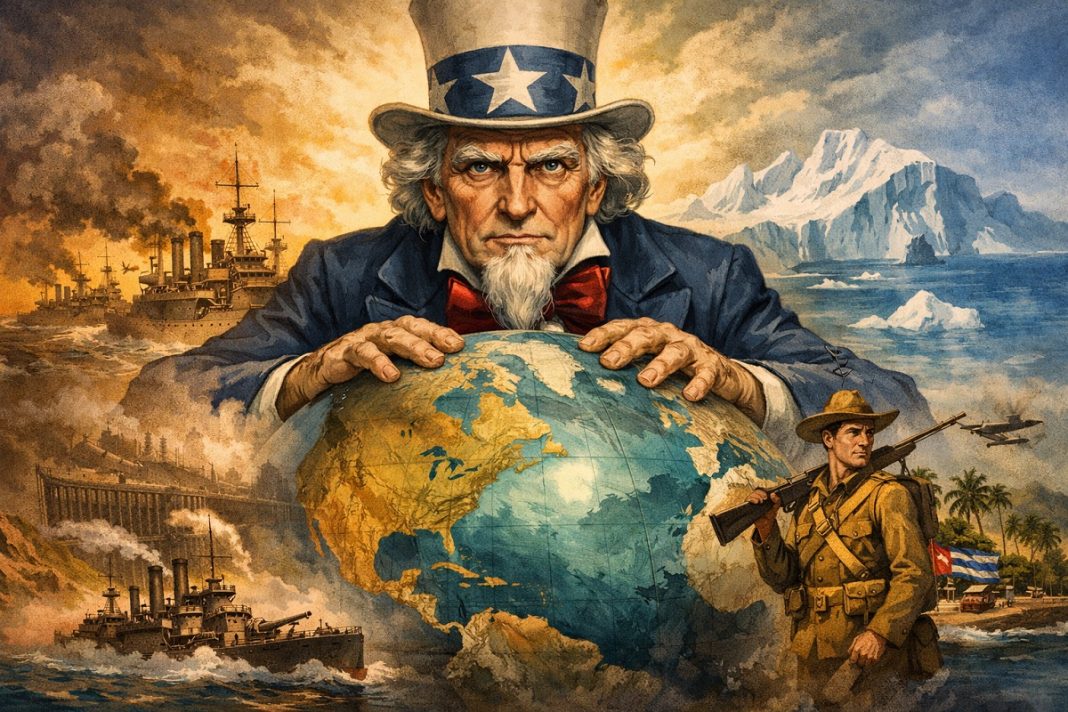
The year 1898 marked a decisive turning point. In defeating Spain, the United States did not simply win a war; it acquired overseas territories, became a Pacific power, and redefined its sense of global responsibility. Leaders such as William McKinley and Theodore Roosevelt came to see national security through a particular lens—one in which prosperity, land, and “civilization” were inseparable. A strong economy was security. Territory conferred prestige and safety. And civilization, as they understood it, justified intervention in societies deemed incapable of governing themselves.
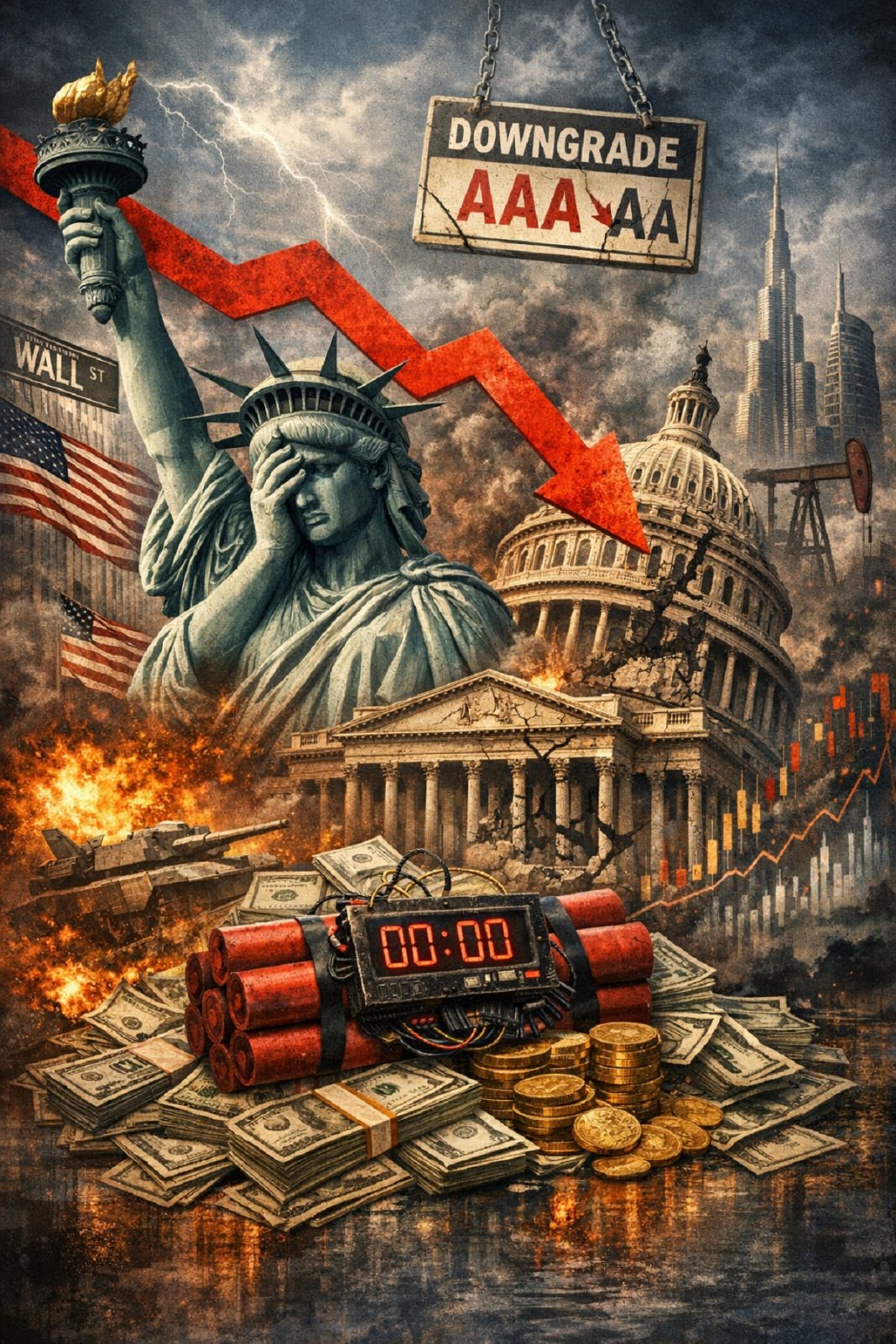
This framework is strikingly familiar today. The Trump administration’s emphasis on re-industrialization, tariffs, and economic self-reliance mirrors McKinley’s conviction that domestic prosperity underwrote national power. Trump’s fascination with territorial acquisition—from Greenland to Panama—recalls the turn-of-the-century belief that land itself enhanced security and status. But most telling is the return of civilizational language: the idea that some societies are orderly, modern, and capable, while others are chaotic, backward, and in need of external guidance.
Venezuela has become the clearest stage for this revival. The removal of Nicolás Maduro is framed not only as a geopolitical or humanitarian necessity, but as a moral act—punishing “crimes against civilization” and restoring order where Venezuelans allegedly cannot do so themselves. This logic closely resembles Theodore Roosevelt’s corollary to the Monroe Doctrine, which transformed a principle meant to defend sovereignty into a rationale for violating it. Then, as now, intervention was justified as a burden reluctantly assumed for the greater good.
History, however, offers a sobering warning. The era that began in 1898 did not simply usher in American greatness; it also ensnared the United States in what might be called the “meddler’s trap.” Once Washington intervened abroad, every subsequent development appeared vital to U.S. interests, precisely because American power was now implicated. The Philippines are the classic example. After defeating Spain, McKinley convinced himself that withdrawal would invite chaos or great-power conflict. Annexation followed, then insurgency, then decades of entanglement. What began as a limited intervention metastasized into a prolonged and brutal war, costing hundreds of thousands of lives and leaving deep moral scars.
The danger today is not that Venezuela will become another Philippines in a literal sense. It is that the same psychological and strategic dynamic is at work. Once the United States commits itself to “running” another country—even temporarily—it inflates the stakes. Internal Venezuelan disputes, economic crises, or political rivalries that once lay outside core U.S. interests suddenly become American problems. Withdrawal begins to look irresponsible, even dangerous. Power creates vulnerability, and vulnerability breeds further intervention.
Supporters of the current approach argue that Venezuela is uniquely important—because of its oil, its location, or its humanitarian crisis. Similar arguments were made in 1898 about trade routes, prestige, and stability. They were not entirely wrong. But they obscured a larger truth: that intervention itself transforms peripheral interests into central ones. The United States did not stumble into decades of involvement in the Philippines because the islands were inherently indispensable. It became trapped because it could not disentangle its sense of responsibility from its sense of control.
There is another, more subtle risk. Civilizational thinking does not stop at foreign borders. In the late nineteenth century, fears about the erosion of American civilization fueled exclusionary immigration policies and domestic repression. Today’s rhetoric about cultural homogeneity, mass migration, and “Western identity” echoes that same anxiety. When civilization becomes a security concept, difference becomes a threat—abroad and at home.
None of this is to deny the brutality of Maduro’s rule or the genuine suffering of Venezuelans. Nor is it to argue for isolationism. The lesson of 1898 is not that the United States should never act, but that it must act with humility about its ability to reshape other societies—and with restraint about turning power into permanence.
History shows that empires rarely recognize the moment when intervention hardens into obligation. By the time the costs are clear, letting go feels impossible. If the United States truly wishes to avoid repeating the mistakes of its first imperial age, it must resist the seductive certainty that it alone can “run” other nations. Otherwise, like McKinley before him, Trump may discover that the greatest danger is not failing to intervene—but intervening in ways that make departure unthinkable.
This article was originally published in Arabic on the Asswak Al-Arab website