Gabriel G Tabarani
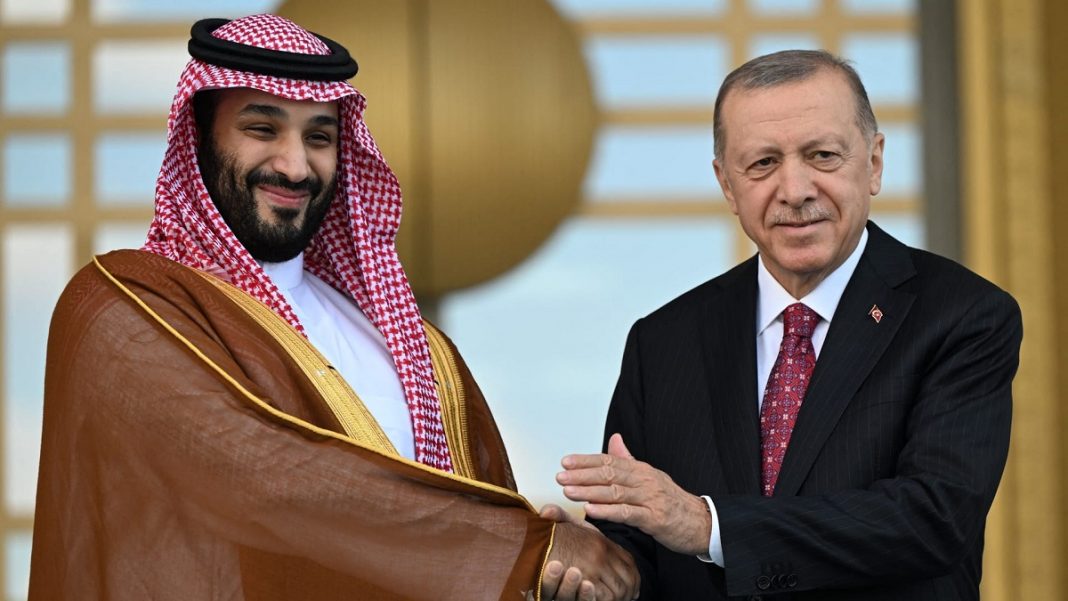
A familiar storyline is taking hold in Washington and across the Middle East: Turkey and Saudi Arabia are drifting toward a formal alliance that could harden into a “Muslim NATO,” implicitly aimed at countering Israel and the United Arab Emirates. It is a neat narrative. It is also deeply misleading.
What is actually unfolding is quieter and more pragmatic. Ankara and Riyadh are not building a rigid bloc or a new collective-security architecture. They are converging around a shared strategic instinct shaped by painful experience: that fragmentation, weak states and proxy warfare have produced only instability, economic loss and long-term insecurity. Their emerging alignment reflects a shift toward stabilizing central governments and insulating themselves from the aftershocks of a Middle East that has not stopped convulsing since 2011.
Turkey’s recalibration is rooted in hard lessons. After the Arab uprisings, Ankara backed political movements that sought to overturn entrenched regimes, betting that ideological kinship would translate into regional influence. Instead, the collapse of central authority in Syria pushed millions of refugees into Turkey and enabled the rise of an autonomous Kurdish zone along its border — a development Ankara still views as an existential threat. Libya’s fragmentation wiped out billions of dollars in Turkish contracts. Egypt’s post-Arab Spring order sidelined Turkey in the eastern Mediterranean.
By the end of the last decade, the conclusion was unavoidable: chaos was not a ladder to power. It was a trap. Since 2020, Ankara has quietly reversed course, abandoning its revolutionary posture in favor of a pro-status-quo strategy that prioritizes state authority, regional integration and economic stabilization. That recalibration has brought Turkey back into alignment with Gulf powers — and especially with Saudi Arabia.
Riyadh, too, has undergone a strategic evolution. Crown Prince Mohammed bin Salman’s Vision 2030 is not merely an economic reform agenda; it is a geopolitical doctrine. It depends on a calmer neighborhood, secure trade corridors and predictable investment environments. That logic helps explain Saudi Arabia’s outreach to former rivals, from Qatar to Iran, and its efforts to wind down the war in Yemen. It also explains Riyadh’s growing discomfort with regional projects that weaken central states or empower separatist forces.
Across several conflict zones, Turkish and Saudi interests are now converging.
In Syria, both capitals have thrown their weight behind a restored central authority in Damascus, viewing state reconstruction as the only viable path to curb militias, contain drug trafficking and roll back Iranian influence. For Turkey, stability in Syria is also a prerequisite for refugee repatriation and a political settlement with Kurdish forces. For Saudi Arabia, it is a gateway to reintegrating Syria into the Arab system.
In Sudan, Ankara and Riyadh back the same side: the Sudanese Armed Forces against the Emirati-supported Rapid Support Forces. For Saudi Arabia, chaos across the Red Sea threatens shipping routes and mega-projects like NEOM. For Turkey, Sudan is a strategic foothold in Africa and a growing market for defense exports.
In Libya, the two former rivals now quietly support the same U.N.-recognized government in Tripoli. And in Somalia, both are aligned behind the federal government, opposing efforts that would entrench secessionist entities and weaken Mogadishu’s authority.
This pattern has fueled claims that Turkey is lining up with Saudi Arabia against a UAE-Israel axis that favors fragmentation over sovereignty. There is some truth in the diagnosis — and very little in the prescription.
Ankara does see Israel as its most serious geopolitical challenger, particularly after the Gaza war and Israel’s expanding footprint in Syria and the Red Sea. Turkish officials are also deeply uneasy about Emirati activism that supports separatist or autonomous forces from Yemen to Somalia. Israel’s recognition of Somaliland, following years of Emirati investment and security cooperation there, crystallized those anxieties.
But Turkey cannot afford an openly anti-UAE posture. Emirati capital is embedded across Turkey’s financial system, energy transition and logistics infrastructure. Abu Dhabi is Turkey’s largest Gulf trading partner and one of its biggest defense customers. Currency swap lines, investment flows and corporate partnerships give the UAE structural leverage that Saudi Arabia simply does not.
Ankara remembers what happened the last time it found itself in Abu Dhabi’s crosshairs. After backing Muslim Brotherhood-aligned movements during the Arab Spring, Turkey was isolated regionally and cut off from Gulf capital just as its economy began to wobble. Repairing those ties has taken years. No Turkish government is eager to relive that experience.
That is why Turkey’s response to the Saudi-UAE clash in southern Yemen was telling. Rather than siding openly with Riyadh, President Recep Tayyip Erdoğan called both leaders and offered mediation. Turkish officials avoided public blame. The message was clear: Ankara wants de-escalation, not alignment warfare.
The same logic applies to Turkey’s reported interest in joining the Saudi-Pakistani defense pact. The agreement’s “one for all, all for one” language has invited comparisons to NATO’s Article 5. But in practice, it is better understood as political signaling — a declaration of Muslim solidarity and strategic autonomy at a moment when faith in U.S. security guarantees is eroding.
What is emerging, then, is not a new bloc but a shared philosophy. Turkey and Saudi Arabia are betting that the Middle East’s future will be shaped less by ideological camps and more by the durability of states. They are aligning around the idea that fragmented sovereignty produces insecurity, migration, militias and economic stagnation.
The Middle East is not being remade through grand alliances and dramatic declarations. It is being reshaped quietly and pragmatically — by two regional heavyweights who have decided that order, not upheaval, is now the better bet.
This article was originally published in Arabic on the Asswak Al-Arab website