Gabriel G Tabarani*
When the war in Ukraine ends, the real danger may just begin.
Wars rarely conclude with the silence of guns; their consequences unfold long after the battlefield quiets. In Russia’s case, the end of the war will not restore stability to Europe. Instead, it will usher in a more volatile phase—defined by a Russia that is diminished in strength yet heightened in grievance, insecurity, and risk-taking.
This paradox—a weaker power that behaves more aggressively—is not unfamiliar in history. But in today’s interconnected world, where conflicts from Eastern Europe to the Middle East increasingly overlap, its implications are far more far-reaching.
The war has shattered the uneasy equilibrium that once defined Russia’s relationship with the West. For decades after the Cold War, tensions persisted, but there remained a lingering assumption that Russia might, eventually, find a place within a broader European order. That assumption no longer holds.
In its place stands a Russia that sees itself as embattled and encircled. This perception is deeply rooted in its strategic culture. Geography has always shaped Russia’s worldview: vast, exposed plains to the west, few natural defenses, and a long history of devastating invasions. From Napoleon to Hitler, these experiences have left a lasting imprint on how Russian leaders understand security.
Today, that historical memory intersects with contemporary developments. NATO’s expansion and Ukraine’s westward orientation have reinforced Moscow’s belief that it faces a hostile strategic environment. Whether justified or not, this perception is now central to Russia’s behavior.
But geography alone does not explain the current moment. Technology has transformed the nature of warfare in ways that deepen Russian insecurity. Advances in precision strikes, missile systems, and surveillance have eroded the protective value of distance. Strategic depth—once Russia’s greatest asset—no longer guarantees safety. As a result, Moscow’s reliance on nuclear deterrence has only grown.
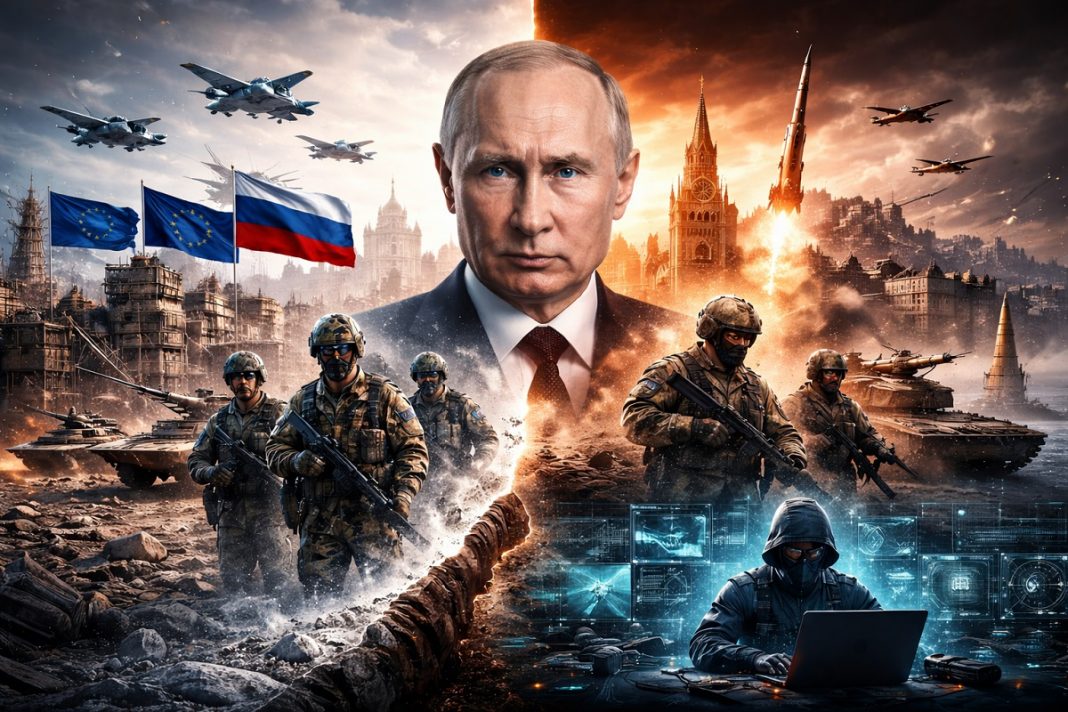
This leads to a stark reality: Russia may emerge from the war militarily weakened, but strategically more dangerous. Its conventional limitations have been exposed, yet its willingness to rely on asymmetric tools is likely to increase. Cyberattacks, disinformation, political interference, and covert operations offer ways to challenge adversaries without triggering full-scale war.
For Europe, this means the conflict will not end with a ceasefire. It will evolve. Hybrid warfare will become a persistent feature of the security landscape, blurring the line between war and peace. Societies—not just armies—will become the primary battleground.
At the same time, Europe itself is undergoing a transformation. Defense spending is rising, military doctrines are shifting, and NATO has expanded. Countries that once prioritized economic engagement with Russia are now preparing for long-term confrontation.
Yet this renewed resolve may not be permanent. The transatlantic alliance—the cornerstone of European security—faces its own uncertainties. The United States remains indispensable, particularly as a nuclear guarantor. But its strategic focus is increasingly global, and its political landscape is unpredictable.
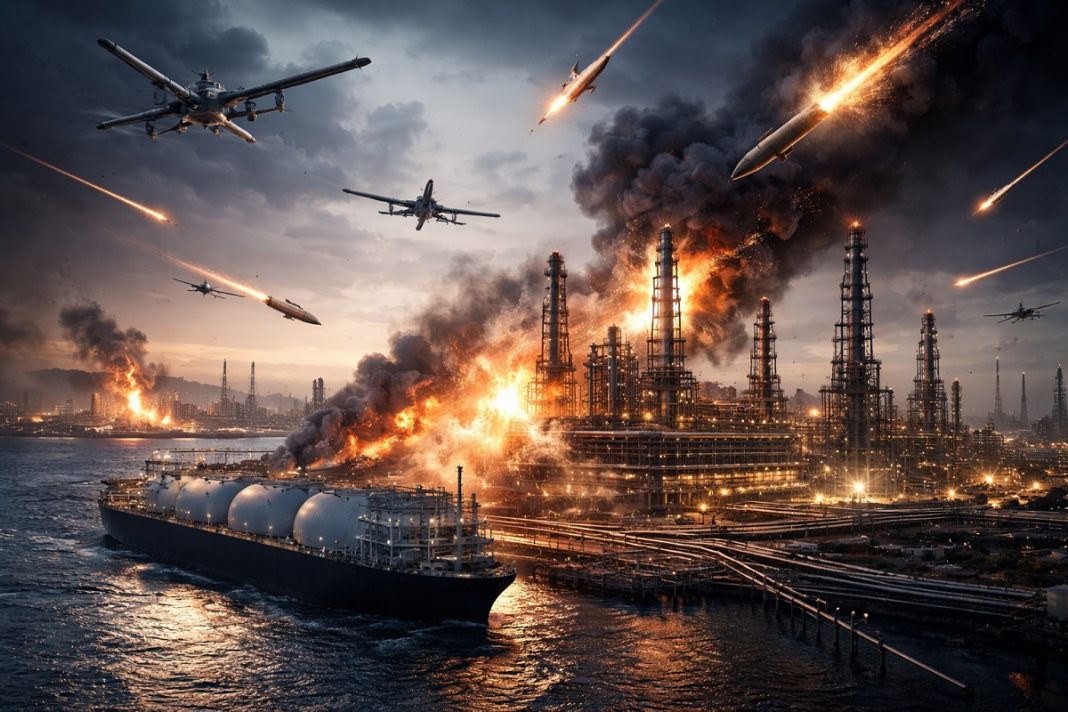
From Ukraine to the Middle East, conflicts are no longer isolated—they are interconnected arenas in a shifting global order. American attention and resources are stretched across multiple fronts, raising questions about the durability of its commitments.
If U.S. engagement in Europe weakens, the consequences could be profound. European states may seek greater strategic autonomy, potentially including independent deterrence capabilities. Such a shift would introduce new uncertainties into an already fragile system—and could create openings for Russia to exploit divisions.
Meanwhile, Russia’s internal trajectory offers little reassurance. The war has strained its economy and exposed systemic weaknesses. But rather than prompting reform, it is likely to reinforce existing patterns: centralized control, political repression, and reliance on nationalism as a source of legitimacy.
History suggests that such conditions do not produce moderation. On the contrary, they can coexist with external assertiveness. A state that feels both weakened and aggrieved may be more inclined to take risks, especially if it perceives its adversaries as divided or distracted.
This is why expectations of a quick normalization of relations with Moscow are misplaced. The drivers of confrontation—geography, historical experience, and strategic culture—are deeply embedded. They will outlast the current war and, quite possibly, its leadership.
The challenge, therefore, is not to “solve” the Russia problem, but to manage it. That requires a careful balance: credible deterrence to prevent escalation, resilience against hybrid threats, and sustained coordination among allies.
There are no easy solutions. The postwar landscape will be shaped by uncertainty, competition, and persistent tension. But one conclusion is unavoidable:
The end of the war will not bring peace. It will mark the beginning of a more unstable era—shaped by a Russia that is weaker, angrier, and still capable of shaking the global order.
This article was originally published in Arabic on the Asswak Al-Arab website