Gabriel G Tabarani
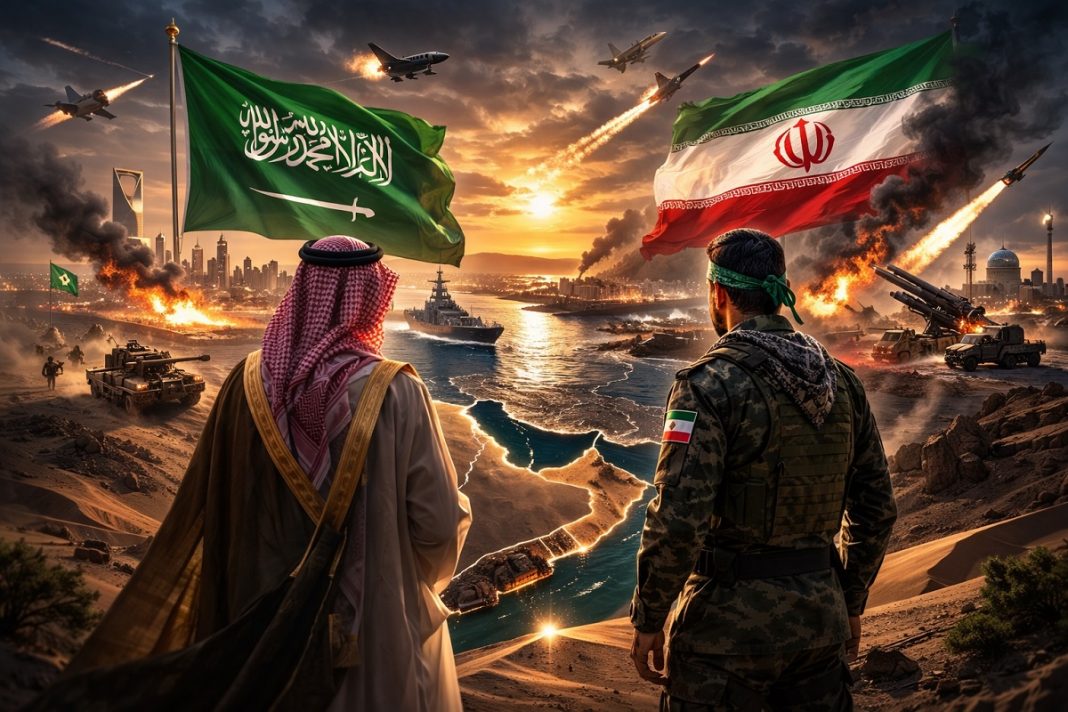
At first glance, the Saudi–Iranian détente looks like an unlikely survivor of the Middle East’s latest storms. Since 2023, when Riyadh and Tehran restored diplomatic relations after seven years of rupture, the region has been shaken by the October 7 war, Israel’s sustained campaign against Iran’s regional allies, direct Israeli strikes on Iranian territory in June 2025, and subsequent U.S. attacks on Iranian nuclear facilities. Yet, remarkably, the Saudi–Iran channel has not collapsed. Instead, it has hardened into something more pragmatic: a shared recognition that rivalry is costly—and regional war would be catastrophic.
For Iran, the logic is strategic necessity. The Islamic Republic’s model of asymmetric deterrence—built on allied actors in Lebanon, Gaza, Syria, and Iraq—has been severely degraded. Hezbollah is under intense Israeli pressure. Hamas has been battered in Gaza. The fall of Bashar al-Assad’s regime in Syria to an anti-Iranian coalition stripped Tehran of a key logistical corridor. Direct Israeli strikes inside Iran in June 2025, followed by U.S. bombings of nuclear facilities, exposed the limits of Iran’s deterrence doctrine. The message was clear: the old rules no longer hold.
Simultaneously, the reimposition of UN “snapback” sanctions in September 2025 deepened Iran’s economic isolation. Arms embargoes and missile restrictions returned. Financial transactions tightened. Secondary U.S. sanctions continued to deter regional banks and firms. Domestically, new waves of protests at the end of 2025 revealed simmering public frustration. Against this backdrop, repairing relations with neighboring Gulf states—especially Saudi Arabia—became less a diplomatic option than a strategic imperative.
Riyadh, for its part, has recalibrated its priorities. Crown Prince Mohammed bin Salman’s Vision 2030 agenda depends on stability. Mega-projects, foreign investment, tourism, and economic diversification cannot thrive amid missile exchanges across the Gulf. Saudi leaders have concluded that open-ended confrontation with Iran drains resources and invites escalation that could jeopardize oil infrastructure—as dramatically illustrated by the 2019 Abqaiq attack. De-escalation, therefore, is not a concession to Tehran but an investment in Saudi transformation.
The June 2025 Israel–U.S. strikes on Iran were the détente’s first major test. In earlier years, such an event might have pushed Riyadh and Tehran into opposing trenches. Instead, Saudi Arabia publicly condemned Israeli attacks on Iranian sovereignty and refused to allow its territory or airspace to be used for military operations against Iran. Iran, in turn, calibrated its retaliation to avoid targeting Saudi assets, even as it struck U.S. positions elsewhere in the region. This mutual restraint signaled that both sides now see value in insulating their bilateral track from broader confrontation.
Still, this détente operates under severe strain. Saudi Arabia remains a strategic security partner of the United States and has signaled openness to eventual normalization with Israel under certain conditions. Iran, by contrast, views the U.S. military presence in the Gulf and Israeli power projection as sources of instability. These structural divergences cannot be wished away. The relationship is not an alliance—it is a managed rivalry.
Economic normalization illustrates both the promise and limits of rapprochement. Trade has resumed, direct flights have restarted, and discussions about joint chambers of commerce have surfaced. Hajj coordination has improved, reducing a long-standing source of tension. Yet comprehensive economic integration remains aspirational. Snapback sanctions and U.S. secondary measures deter major Saudi and Gulf firms from meaningful engagement in Iran. Financial institutions across the GCC are deeply integrated into Western regulatory systems; they cannot risk penalties. As long as Iran’s nuclear file remains securitized and sanctions-heavy, trade will be incremental and symbolic rather than transformative.
The Trump factor looms large over this fragile balance. Washington’s current approach toward Tehran combines economic coercion with calibrated military strikes aimed at degrading Iran’s nuclear and missile capabilities. Israeli leaders have signaled that they will not tolerate an unchecked Iranian program and appear willing to strike again if necessary. The possibility of a short, sharp conflict—designed to reset deterrence without triggering full-scale war—is openly discussed in strategic circles.
In this environment, the Saudi–Iran détente serves multiple functions. For Tehran, it demonstrates that Iran is not regionally isolated, even under sanctions and military pressure. Gulf condemnation of Israeli and U.S. strikes allows Iran to frame itself as a victim of external aggression rather than a regional spoiler. For Riyadh, maintaining dialogue with Tehran reduces the risk that Saudi territory becomes a battleground in a future escalation. It also positions the Kingdom as a regional stabilizer rather than a proxy arena for great-power confrontation.
But the most dangerous scenario lies in what Iranian officials describe as “hybrid war”: a combination of military pressure, economic strangulation, covert action, and information warfare designed to destabilize the regime internally. If Washington and Tel Aviv were to synchronize external strikes with intensified internal pressure, Tehran might feel cornered. In such a context, Iran’s emerging doctrine—more overtly offensive and less patient—could lead it to expand a conflict geographically, targeting energy infrastructure, shipping lanes, or even resorting to cyber and unconventional tools. Such escalation would put Riyadh in an excruciating position: balancing its U.S. alliance against its interest in avoiding regional conflagration.
The durability of the détente will therefore depend less on rhetoric and more on institutionalization. Regular security dialogues, crisis hotlines, and military-to-military communication channels could help clarify red lines. Hajj diplomacy, often dismissed as symbolic, offers a model of technocratic cooperation insulated from geopolitics. Expanding cooperation in low-risk sectors—public health, environmental management, disaster response—could build constituencies for sustained engagement.
Ultimately, Saudi–Iran rapprochement does not eliminate rivalry. It reframes it. Both capitals now appear to accept that unmanaged hostility is too costly, particularly at a moment when U.S.–Iran tensions and Israeli–Iranian shadow warfare risk boiling over into open confrontation. The détente may not blossom into partnership. But if it can survive under fire—sanctions, strikes, and domestic upheaval—it could anchor a new pattern in Gulf politics: competitive coexistence rather than permanent crisis.
In an era defined by volatility, that alone would be a strategic achievement.
This article was originally published in Arabic on the Asswak Al-Arab website