Gabriel G.Tabarani
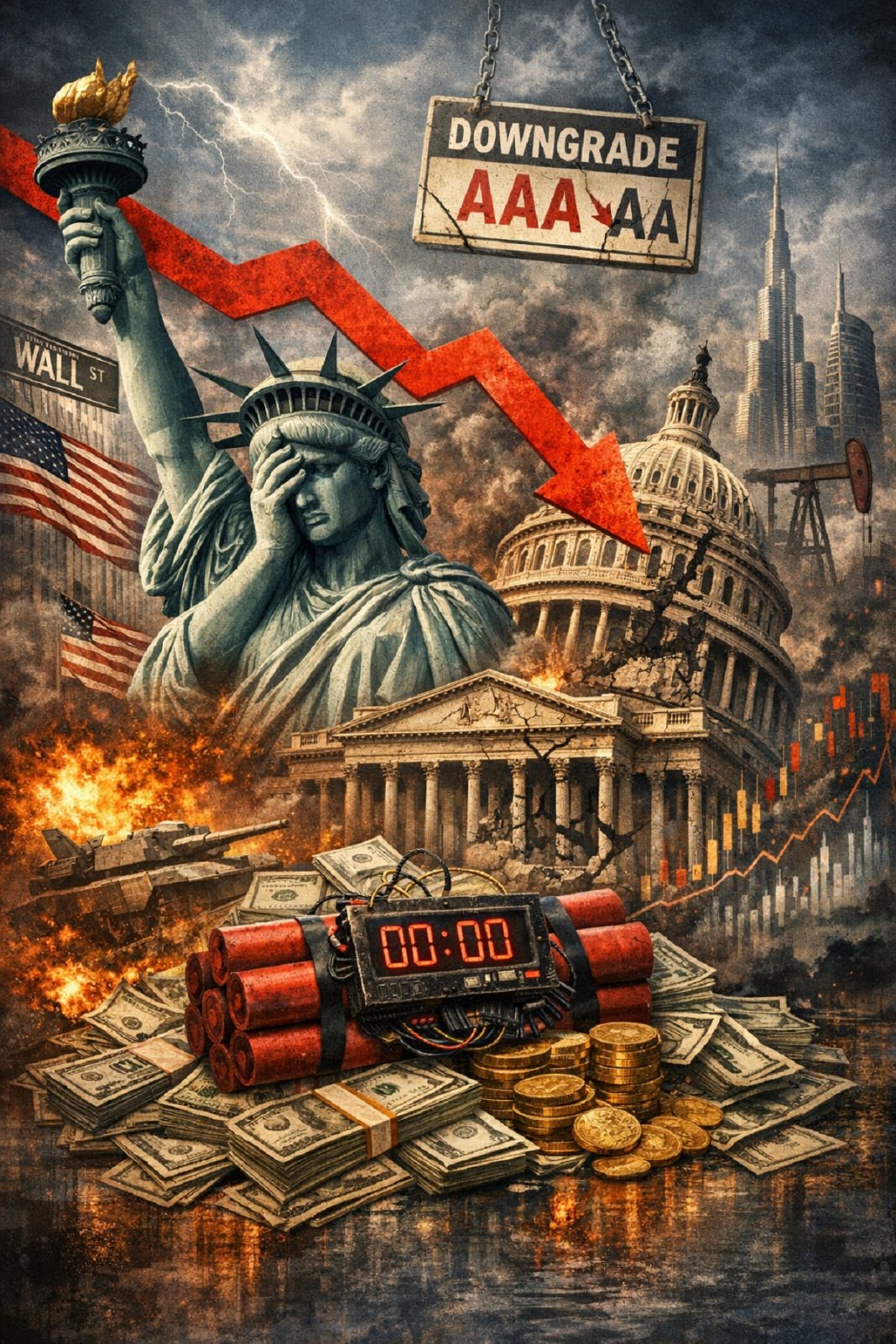
The new year begins with a subtle but consequential shift in the United States’ fiscal story: a debt problem long deferred is now approaching a test of market confidence.
For much of the past quarter-century, the US appeared uniquely capable of borrowing its way out of trouble. Wars, recessions, financial crises and pandemics were met with ever-larger deficits, while investors—domestic and foreign—absorbed the resulting debt with little complaint. Even as public debt climbed steadily towards 100 per cent of GDP, interest rates remained low and demand for US Treasuries seemed inexhaustible. The dollar’s status as the world’s primary reserve currency reinforced the belief that America could always roll over its obligations at minimal cost.
That assumption is now under strain.
Long-term Treasury yields have risen sharply over the past two years, reflecting not only tighter monetary policy but also deeper concerns about inflation, political dysfunction and the sustainability of US fiscal policy. With gross federal debt nearing $37tn, even modest increases in borrowing costs have large consequences. A one percentage point rise in average interest rates adds roughly $370bn to annual debt servicing costs. In fiscal year 2024, interest payments exceeded US defence spending—an inflection point that is as symbolic as it is material.
Markets, in short, are no longer indifferent.
The deterioration cannot be blamed on a single administration. The erosion of fiscal discipline has been bipartisan and cumulative. Republican governments normalised large deficits to fund tax cuts, arguing that growth would eventually pay for them. Democratic administrations expanded borrowing to support social spending and crisis response, often with the expectation that low interest rates would persist indefinitely. The post-2008 era of ultra-cheap money reinforced these instincts, encouraging the belief that debt ratios mattered less than previously assumed.
But interest rates do not remain low forever. The 2010s were an anomaly shaped by the aftermath of a global financial crisis, weak demand, and aggressive central bank intervention. Today, the global backdrop looks very different. Public debt has risen across advanced economies, investment demands linked to energy transition, defence, reshoring and artificial intelligence are increasing, and political pressures for higher spending are intensifying. These forces point to structurally higher real interest rates than those policymakers became accustomed to over the past decade.
The implications extend beyond US borders. Many governments, particularly in emerging markets, price their own borrowing off US yields. Central banks around the world hold US Treasuries as core reserves. Any sustained loss of confidence in US fiscal management would ripple through global capital markets, tightening financial conditions well beyond American shores.
Optimists argue that rapid economic growth—possibly driven by breakthroughs in artificial intelligence—will resolve the problem by boosting tax revenues and easing debt dynamics. Such an outcome is conceivable. But it is also a high-risk wager. Growth forecasts are notoriously uncertain, while history suggests that major shocks—financial, geopolitical or environmental—tend to arrive before debts are comfortably stabilised. The pandemic alone added debt equivalent to roughly 15 per cent of GDP; the global financial crisis closer to 30 per cent.
If another shock arrives while debt levels are high and interest rates elevated, policymakers will face unpalatable choices. Sharp fiscal consolidation could undermine growth and political stability. Inflation could erode the real value of debt but at significant cost to households and credibility. More interventionist approaches—such as financial repression or regulatory pressure on domestic institutions to absorb government debt—would distort capital allocation and weaken long-term productivity. None of these options is cost-free, and all would represent a departure from the economic model that has underpinned US financial leadership.
There is also a broader strategic dimension. Reserve currencies do not exist in isolation; they rest on the economic strength and institutional credibility of the issuing state. History offers few examples of countries that maintained monetary dominance while allowing fiscal fundamentals to deteriorate unchecked. Confidence, once lost, is difficult to restore.
None of this implies that a US debt crisis is inevitable. The country retains deep capital markets, strong institutions and considerable economic potential. But the margin for complacency has narrowed. Relying on favourable growth surprises and perpetually accommodating markets is no longer a strategy—it is a gamble.
As the year opens, the question confronting the United States is not whether debt still matters, but whether it will act before markets decide that it does.
This article was originally published in Arabic on the Asswak Al-Arab website