Gabriel G. Tabarani
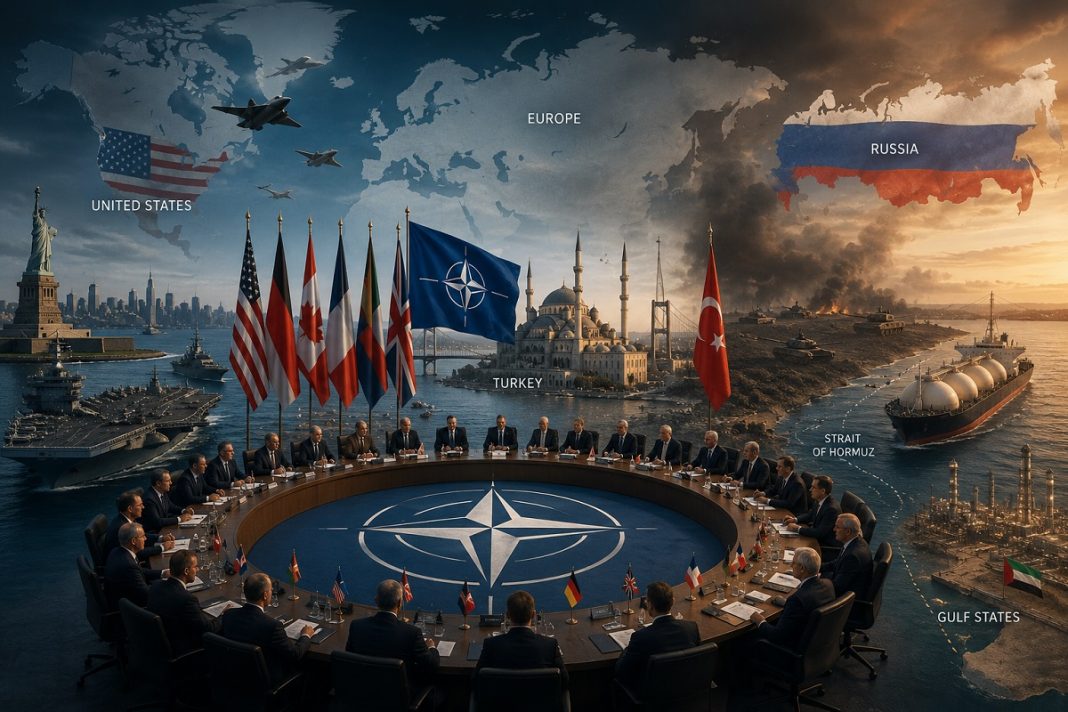
When NATO leaders gather in Ankara this week, attention will inevitably focus on Ukraine, Russia and defence spending. Those issues matter. But they are not what will define this summit.
The real story is the quiet transformation taking place inside the alliance itself. For the first time since the end of the Cold War, NATO is preparing for a future in which the United States expects Europe—not Washington—to become the principal provider of conventional security on the continent.
This transition has been unfolding for years. Donald Trump’s return to the White House did not create it; it accelerated it. What was once a debate over burden-sharing has become something far more consequential: a strategic redistribution of responsibility across the Atlantic.
That shift reflects a broader reality. For successive US administrations, China—not Russia—has become the defining long-term strategic challenge. Barack Obama began the “pivot to Asia.” Joe Biden deepened American engagement in the Indo-Pacific while sustaining support for Ukraine. Trump’s second presidency has simply made explicit what has long been implicit: Europe must assume greater responsibility for its own defence because Washington’s strategic priorities have changed.
For Europe, this is no longer a political disagreement but a structural adjustment.
The continent has responded with unprecedented increases in defence spending. Germany has abandoned decades of military restraint. Poland is rapidly expanding its armed forces. France continues to champion greater European strategic autonomy, while Nordic states are deepening regional defence cooperation. Across Europe, defence has become one of the fastest-growing areas of public investment.
Yet money alone cannot replace capability.
European militaries remain heavily dependent on the United States for strategic airlift, satellite intelligence, integrated missile defence, logistics and nuclear deterrence. These are capabilities built over decades and cannot be replicated through larger budgets alone. They require industrial capacity, technological innovation and sustained political coordination.
This explains why European governments are asking a different question today. The issue is no longer whether the United States will eventually reduce its military footprint. It is whether that transition can occur in a predictable manner.
Strategic certainty has become almost as valuable as military capability itself.
A poorly managed American drawdown would risk creating precisely the deterrence gap Moscow has long sought to exploit. Since launching its invasion of Ukraine, Russia has consistently aimed to weaken political cohesion within NATO as much as military support for Kyiv. Every public disagreement over funding, troop deployments or security guarantees reinforces the Kremlin’s belief that Western unity is conditional rather than enduring.
But Russia is no longer the alliance’s only strategic concern.
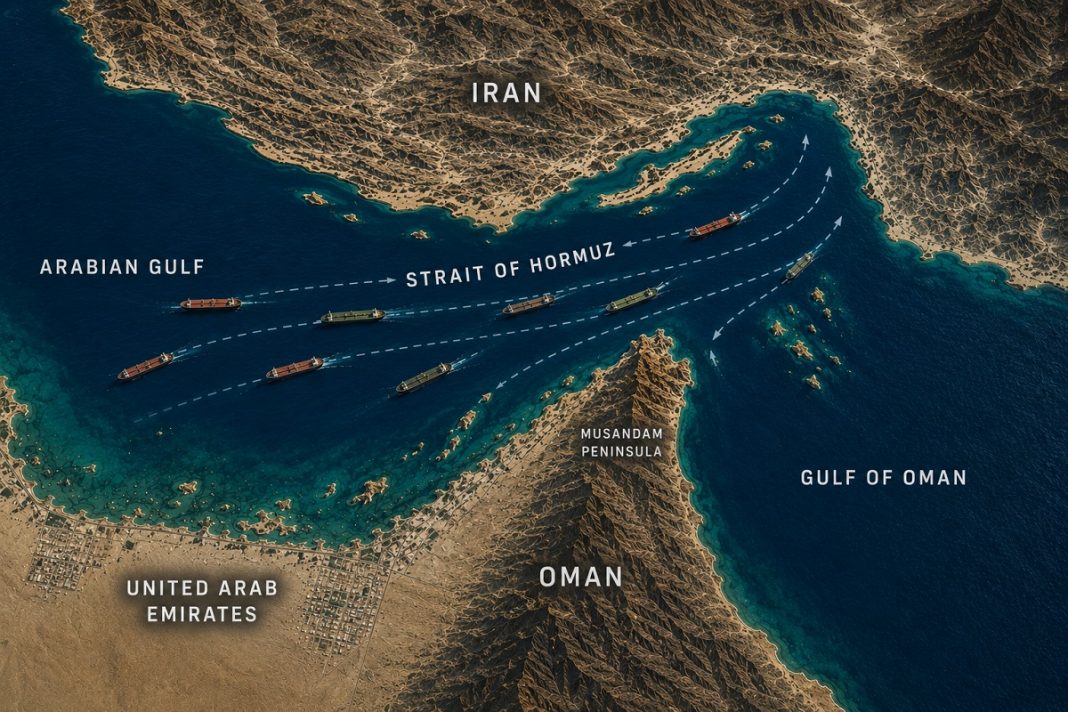
The wars in Ukraine and the Middle East, persistent instability in the Red Sea and recurring tensions around the Strait of Hormuz have demonstrated that European security no longer ends at the continent’s eastern borders. Energy security, maritime trade and supply-chain resilience have become integral components of European defence planning.
That evolution carries significant economic consequences.
Europe’s rearmament is no longer simply a security story; it is becoming one of the continent’s most important industrial transformations since the end of the Cold War. Governments are investing hundreds of billions of euros not merely to purchase weapons but to rebuild defence manufacturing, secure critical supply chains and strengthen technological sovereignty.
This inevitably changes the transatlantic economic relationship.
For decades, European security largely meant buying American equipment. Increasingly, however, European governments are demanding technology transfers, joint production and greater domestic industrial participation. Defence procurement is becoming as much an industrial policy as a military necessity.
The implications extend well beyond Europe.
Following Russia’s invasion of Ukraine, Europe has become increasingly dependent on Gulf energy exports. The security of maritime routes—from the Eastern Mediterranean to the Red Sea and the Strait of Hormuz—is therefore no longer simply a regional concern. It directly affects inflation, shipping costs, energy markets and global trade.
For Gulf states, this changing landscape presents both opportunities and responsibilities. As Europe’s strategic focus shifts southward, partnerships in energy, logistics, maritime security and defence cooperation are likely to deepen. Security and economics are becoming inseparable.
This broader geography also explains why Turkey matters more today than at any point in recent years.
Hosting the summit is symbolically important, but Ankara’s strategic value goes much further. Turkey possesses NATO’s second-largest military, a rapidly expanding defence industry and a geographical position connecting Europe, the Black Sea, the Caucasus and the Middle East. It has maintained working relationships with Ukraine and Russia alike while remaining firmly embedded within NATO’s command structure.
In an era where security challenges increasingly cross regional boundaries, Turkey has become less an outlier than a bridge between theatres that the alliance can no longer afford to treat separately.
Whether the Ankara summit produces dramatic announcements is almost beside the point.
Its significance lies in acknowledging a strategic transition that is already under way. Europe is preparing to shoulder greater responsibility for its own defence. The United States is redefining—not abandoning—its commitment to the continent. Turkey is positioning itself as an indispensable link between Europe’s eastern and southern security theatres.
The challenge for NATO is no longer deciding whether this transition should happen. It is ensuring that it happens without creating the very security vacuum its adversaries would be quickest to exploit.
History may ultimately remember the Ankara summit not for its communiqué or its spending commitments, but as the moment the alliance quietly accepted that the era of unquestioned American leadership had given way to a more balanced transatlantic partnership—one in which Europe assumes greater responsibility while the United States remains its indispensable strategic anchor.
This article was originally published in Arabic on the Asswak Al-Arab website