Gabriel G Tabarani
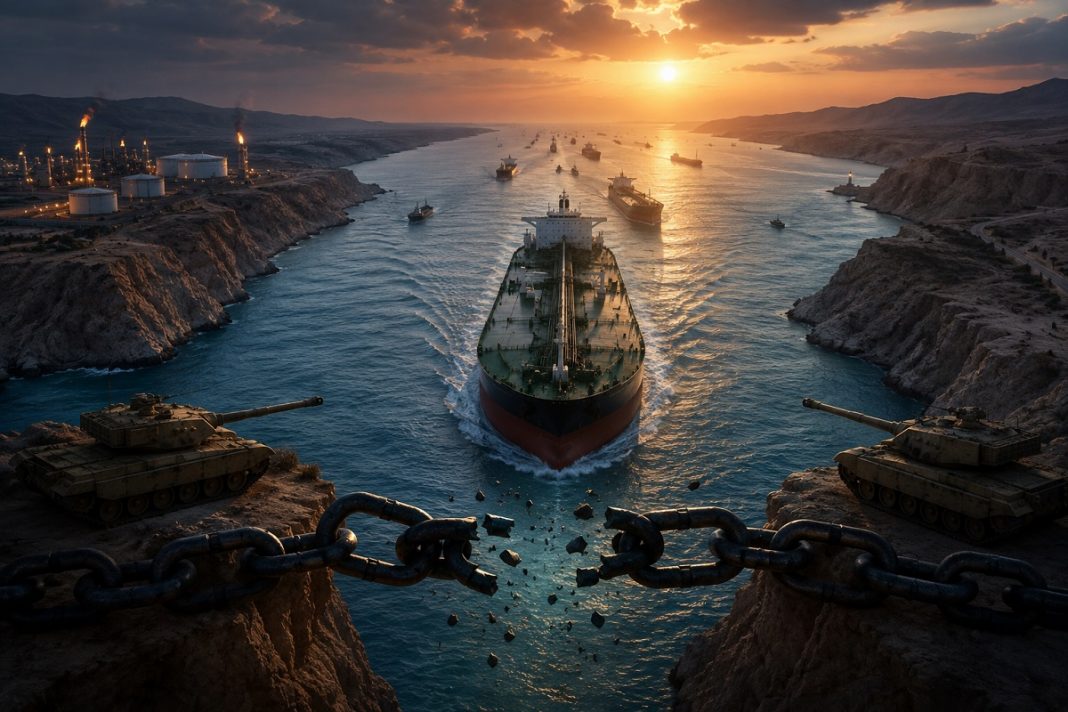
While the world spent months focusing on missiles, drones, and nuclear facilities in the confrontation between the United States and Iran, the real story was unfolding elsewhere. The central actor was neither a military commander nor a political leader. It was a narrow waterway: the Strait of Hormuz.
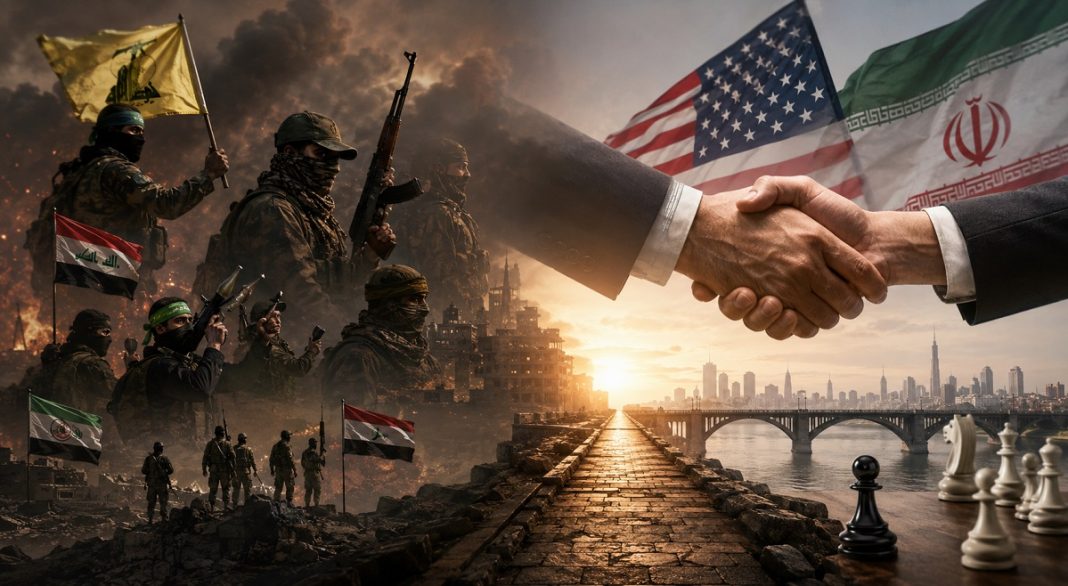
The emerging Memorandum of Understanding (MoU) is often presented as a diplomatic breakthrough or a temporary pause in hostilities. But a deeper reading suggests something more significant. The conflict did not slow down because one side achieved a decisive victory. It slowed down because the global economy could no longer afford its continuation.
In that sense, the most important lesson of the crisis has little to do with nuclear negotiations. It has to do with the changing nature of power itself.
For much of the twentieth century, geopolitical competition revolved around control of energy resources. Nations fought over oil fields, pipelines, and producing regions. In the twenty-first century, however, the focus is increasingly shifting toward something different: the routes through which energy flows.
The Strait of Hormuz is perhaps the clearest example of this transformation.
The waterway is no longer merely a shipping lane. It is a strategic chokepoint whose disruption can ripple through global markets within hours. Energy prices, insurance costs, supply chains, inflation expectations, and financial markets all respond to developments in a narrow maritime corridor connecting the Persian Gulf to the wider world.
The recent crisis demonstrated a reality that policymakers often prefer to ignore. The global economy proved more sensitive to the threat of a prolonged disruption in Hormuz than to months of military operations.
As tensions escalated, both Washington and Tehran found themselves constrained by economic realities. The United States faced the prospect of higher energy prices and renewed inflationary pressures. Iran confronted the limits of an economy already weakened by sanctions, currency depreciation, and chronic underinvestment.
The result was predictable: economic considerations gradually became more influential than military calculations.
That is why discussions surrounding the MoU have focused so heavily on maritime traffic, oil exports, sanctions relief, frozen assets, and economic reconstruction. These are not secondary issues. They are the heart of the matter.
More broadly, the crisis highlights a larger shift in the architecture of global influence.
Today, power is no longer measured solely by military capabilities or even by economic size. Increasingly, it depends on a country’s position within critical networks of trade, finance, transportation, and energy.
The United States wields the power of the dollar and the global financial system. China has expanded its influence through ports, logistics networks, and the Belt and Road Initiative. Russia has long used pipelines and energy exports as instruments of leverage.
Iran’s experience suggests that geography itself can be a strategic asset. The country’s importance stems not only from its nuclear ambitions or regional alliances but also from its location along one of the world’s most critical maritime corridors.
And Hormuz is unlikely to be the last example.
From the Red Sea and Bab el-Mandeb to the Suez Canal and the Strait of Malacca, strategic chokepoints are becoming central elements of twenty-first-century competition. As globalization deepens, the value of locations capable of facilitating—or disrupting—the flow of goods and energy continues to rise.
The significance of the U.S.-Iran MoU therefore extends far beyond the future of Iran’s nuclear program. It offers a glimpse into a world where influence increasingly flows through trade routes, shipping lanes, and supply chains rather than traditional battlefields alone.
For decades, analysts assumed that globalization would diminish the importance of geography. The opposite may be happening. Geography is returning—not through territorial conquest, but through control of the networks upon which the global economy depends.
The ultimate lesson of the Hormuz crisis is not that diplomacy triumphed over war. It is that markets became an active participant in the conflict. Global commerce, energy flows, and financial stability imposed constraints that neither side could ignore.
Wars have long been seen as instruments for redrawing maps of power. Yet the Strait of Hormuz suggests that trade routes may increasingly redraw those maps themselves.
The true winner of this crisis was neither Washington nor Tehran.
It was geography.
This article was originally published in Arabic on the Asswak Al-Arab website