Gabriel G. Tabarani
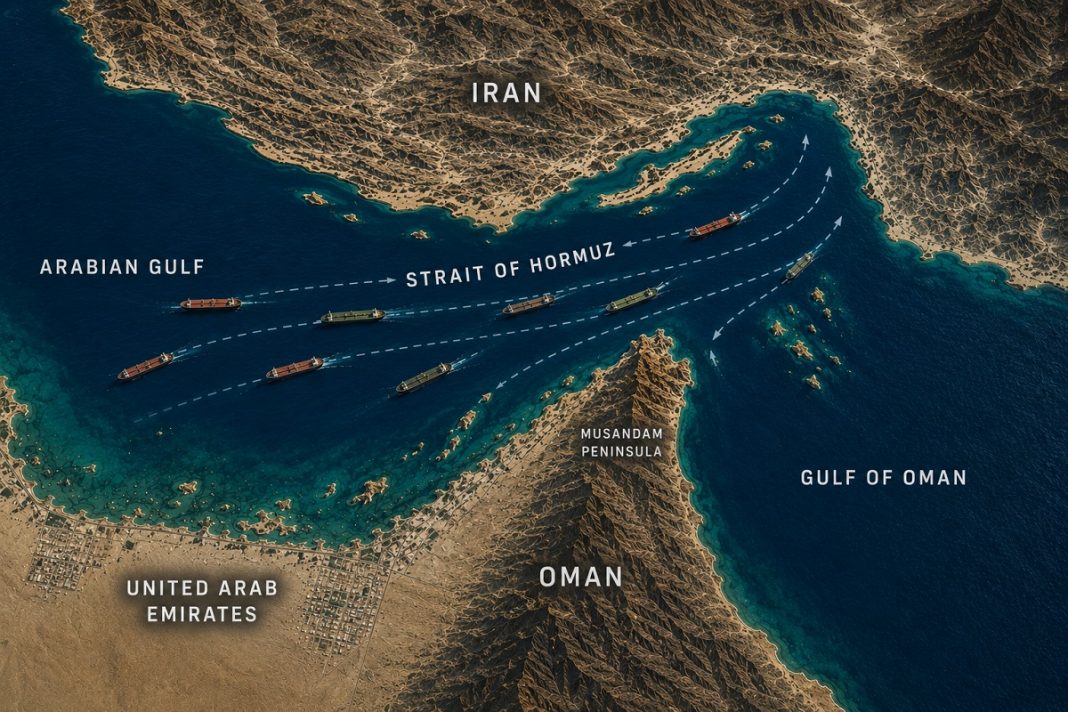
The debate over the Strait of Hormuz is no longer about whether Iran can close it. It is about something far more consequential: who gets to define the rules governing the world’s most important energy chokepoint.
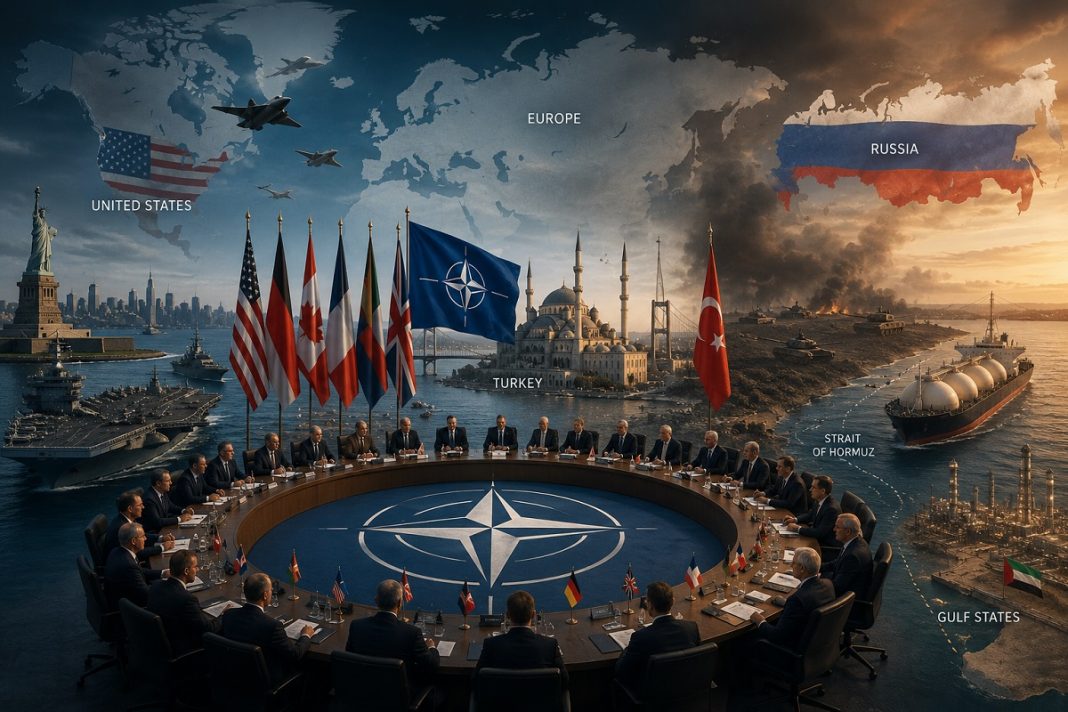
That distinction matters because it points to a broader transformation in international politics. For decades, strategic waterways were governed by a relatively stable bargain. International law guaranteed freedom of navigation, while American naval power provided the security architecture that made those legal principles meaningful. Today, that model is under increasing strain. Across the world’s most sensitive maritime corridors, regional powers are seeking not merely to challenge freedom of navigation but to shape the rules under which it operates.
The Strait of Hormuz has become the latest—and perhaps most consequential—testing ground for this shift.
Until the recent US-Iran conflict, the strategic equation in Hormuz was remarkably consistent. Tehran possessed the ability to threaten commercial shipping and periodically remind the world of its geographic leverage. Yet it never exercised any recognised authority over the administration of maritime traffic. The distinction between possessing disruptive power and possessing regulatory authority remained clear.
The post-war diplomatic landscape is beginning to blur that distinction.
References in the US-Iran memorandum of understanding to navigation under Iranian “arrangements”, proposals circulating within the shipping industry concerning new insurance mechanisms, and Oman’s subsequent initiative for a voluntary maritime service framework all point to a debate that extends well beyond shipping logistics. Collectively, they raise a more fundamental question: who has the authority to organise, supervise and ultimately define navigation through an international strait?
At first glance, the discussion appears technical. It revolves around voluntary service charges, insurance requirements, navigational assistance and traffic coordination. Yet these seemingly administrative issues conceal a strategic contest over legitimacy.
The real issue is not whether vessels might one day contribute to the cost of navigational services. International shipping already pays for numerous maritime services around the world. The question is whether such mechanisms gradually establish a new political reality in which Iran acquires an institutional role in governing one of the world’s most strategically important waterways.
That is precisely why Oman’s diplomatic initiative deserves closer attention than it has so far received.
Muscat is often portrayed as mediating between Washington and Tehran. In reality, its current proposal appears to serve a more complex purpose. Rather than advancing Iranian interests, Oman may be attempting to prevent Iran from becoming the sole architect of a post-war maritime order.
This distinction is crucial.
The Sultanate understands that rejecting any Iranian role outright may simply encourage Tehran to impose unilateral arrangements based on geographical control of the northern shoreline. Yet endorsing an expansive Iranian regulatory role would almost certainly provoke opposition from the United States, the Gulf states, international shipping companies and much of the maritime legal community.
The voluntary service-cost mechanism reportedly proposed by Muscat therefore represents an attempt to occupy the narrow space between those two outcomes. It seeks to acknowledge geopolitical realities without allowing them to rewrite international maritime law.
Whether such a balance can actually be maintained remains an open question.
Legally, the framework appears straightforward. Under the United Nations Convention on the Law of the Sea (UNCLOS), the Strait of Hormuz enjoys the regime of transit passage. The International Maritime Organization has consistently maintained that there is no established legal basis for mandatory tolls imposed simply for exercising that right.
Yet maritime history repeatedly demonstrates that legal principles do not operate independently of political power.
Russia’s actions in the Black Sea fundamentally altered commercial navigation despite existing international rules. China has steadily expanded administrative control across parts of the South China Sea while legal disputes remain unresolved. In the Red Sea, attacks by the Houthis forced global shipping companies to reroute vessels regardless of the legal guarantees protecting navigation.
In each case, power shaped practice before law could respond.
Hormuz increasingly appears to fit the same pattern.
The central question is therefore no longer what international law permits. It is whether geopolitical realities can gradually redefine what international law comes to tolerate.
This explains why China has quietly emerged as an important stakeholder in the debate.
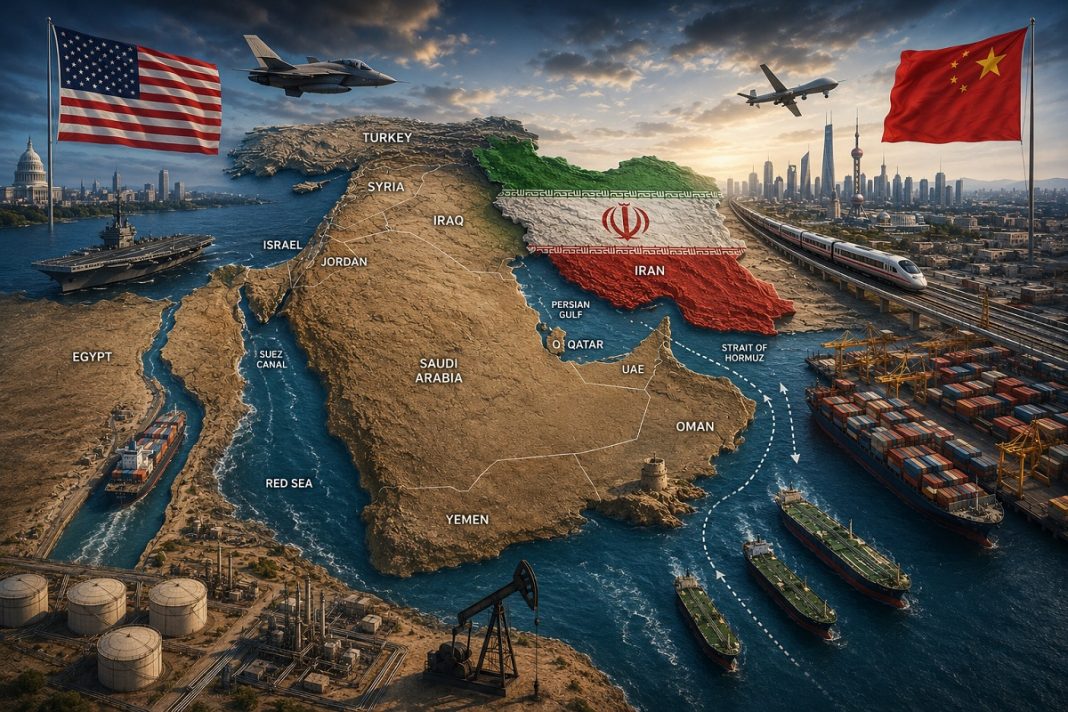
Beijing has little interest in becoming involved in the political confrontation between Washington and Tehran. Yet it has an overwhelming economic interest in preserving predictable access to Gulf energy supplies. As the world’s largest importer of crude oil—and one of the principal beneficiaries of stable maritime trade—China has every incentive to oppose any arrangement that introduces political uncertainty, additional costs or discretionary control over Hormuz.
Its recent call for the Strait to return to the pre-war operating framework reflects that calculation. Beijing is not defending American strategy. It is defending the stability upon which its own economic model depends.
That creates an unusual convergence between Washington and Beijing.
The two powers disagree on almost every aspect of global security. Yet neither wants to see Hormuz transformed into a politically managed waterway where access depends on negotiations with a regional power.
The Gulf states face an equally delicate dilemma.
Saudi Arabia, the United Arab Emirates, Kuwait, Bahrain and Qatar all depend on uninterrupted maritime access for their energy exports. Their priority is stability. But stability achieved by institutionalising Iranian influence over the route through which much of their oil reaches international markets would represent an uncomfortable bargain.
This explains the UAE’s strong opposition to any mandatory fees or transit charges. The concern extends beyond commercial costs. Gulf capitals worry that accepting even limited exceptions in Hormuz could establish precedents with implications for the wider international maritime order.
For Iran, however, the strategic logic has evolved.
For decades, threatening to close Hormuz served primarily as a deterrent. It was an instrument of escalation designed to raise the costs of confrontation. But closure is ultimately self-defeating. It damages Iran’s own economy, risks military retaliation and alienates major trading partners.
Participation in regulating navigation offers something potentially more valuable. It transforms geographic leverage into political legitimacy.
Instead of demonstrating that it can disrupt global trade, Tehran seeks recognition that it cannot be excluded from managing it.
That objective is considerably more durable—and potentially more consequential—than periodic threats to close the Strait.
Washington therefore confronts a strategic dilemma with no easy resolution.
Rejecting any Iranian role risks encouraging unilateral measures that increase instability. Accepting too much, however, risks legitimising a precedent that could eventually extend beyond the Gulf to other strategic waterways where regional powers seek greater control.
This is why the current discussions should not be understood simply as negotiations over maritime administration.
They are negotiations over the future architecture of international navigation.
For nearly eighty years, the global maritime system has rested on a relatively simple principle: international waterways belong to the international community, not to the states that border them. The current debate over Hormuz suggests that this principle is no longer beyond challenge.
Four decades ago, the world’s principal concern was whether Iran might close the Strait of Hormuz.
Today, the more consequential question is whether it can become one of its regulators.
The difference may appear semantic.
In reality, it marks the difference between a world in which great powers guarantee the rules of maritime commerce and one in which regional powers increasingly negotiate, reinterpret—or redefine—them.
If that transition is indeed underway, then the real significance of Hormuz lies not in the Strait itself, but in what it reveals about the changing nature of the international order. It may prove to be the first major test of whether the rules governing global trade remain universal—or become another arena in which power writes its own law.
This article was originally published in Arabic on the Asswak Al-Arab website