Gabriel G Tabarani
For more than a century, military power was measured in familiar ways: the size of an army, the sophistication of its weapons, the strength of its logistics and the ability to seize territory. Wars differed in scale and geography, but the underlying assumptions remained remarkably stable. Victory belonged to the side with superior firepower and better execution.
That assumption is beginning to unravel.
The wars that have defined this decade — Ukraine, Gaza, the Red Sea and, most recently, the confrontation between the United States and Iran — are not connected by geography or politics alone. They reveal something far more consequential: modern warfare is changing faster than military doctrine can keep pace with it.
The most important lesson from these conflicts is not that drones have become ubiquitous or that artificial intelligence is transforming the battlefield. Those are symptoms, not the disease. The deeper shift is that no military can assume its original battle plan will survive the opening phase of a war.
Planning still matters. But adaptation has become decisive.
Military institutions have long been built on accumulated experience. They studied previous wars, codified their lessons into doctrine and trained future officers to execute them. The assumption was simple: prepare well enough in peacetime, and success in wartime would largely depend on disciplined implementation.
Today’s conflicts challenge that logic.
The battlefield has become too dynamic, too interconnected and too technologically fluid for any fixed doctrine to remain sufficient. Commanders no longer confront only enemy armies. They must simultaneously account for cyberattacks, satellite networks, commercial drones, artificial intelligence, social media, global supply chains, energy markets and real-time information flows. Any one of these variables can reshape the battlefield overnight.
The result is a profound shift in the nature of military power.
In Ukraine, inexpensive drones forced armies to rethink concepts that had dominated military planning for decades. Tanks did not disappear, but they could no longer operate under old assumptions. Precision no longer depended exclusively on expensive weapons systems, and battlefield innovation often emerged from civilian technology adapted faster than traditional procurement systems could respond.
In the Red Sea, a non-state actor compelled some of the world’s most powerful navies to alter deployment patterns in order to protect one of the world’s most critical maritime corridors. The challenge was not defeating fleets in conventional battle. It was changing the strategic equation at minimal cost.
Gaza exposed another reality. Tactical control over territory did not necessarily translate into strategic control over the conflict. Urban warfare, underground infrastructure, information operations and public perception became as influential as conventional military superiority.
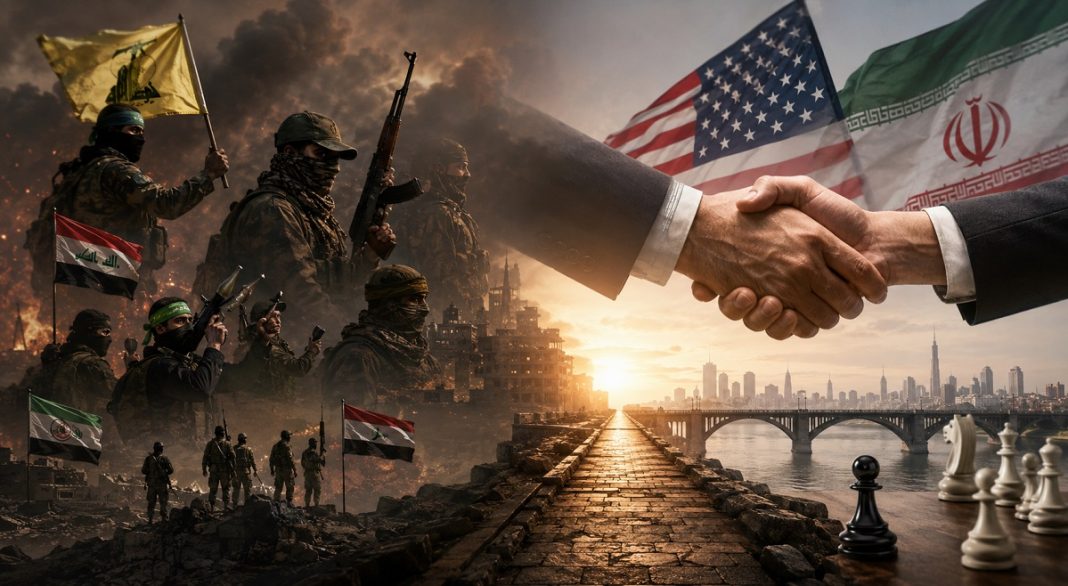
Then came the confrontation with Iran.
The United States demonstrated overwhelming operational superiority. Yet Tehran understood that competing on Washington’s preferred terms would be futile. Instead, it sought to redefine the battlefield itself. Pressure shifted between missiles, drones, maritime security, energy markets and psychological signaling. Regardless of how one judges the military outcome, the defining feature of the conflict was that every participant kept adjusting strategy while the fighting continued.
This is the real transformation.
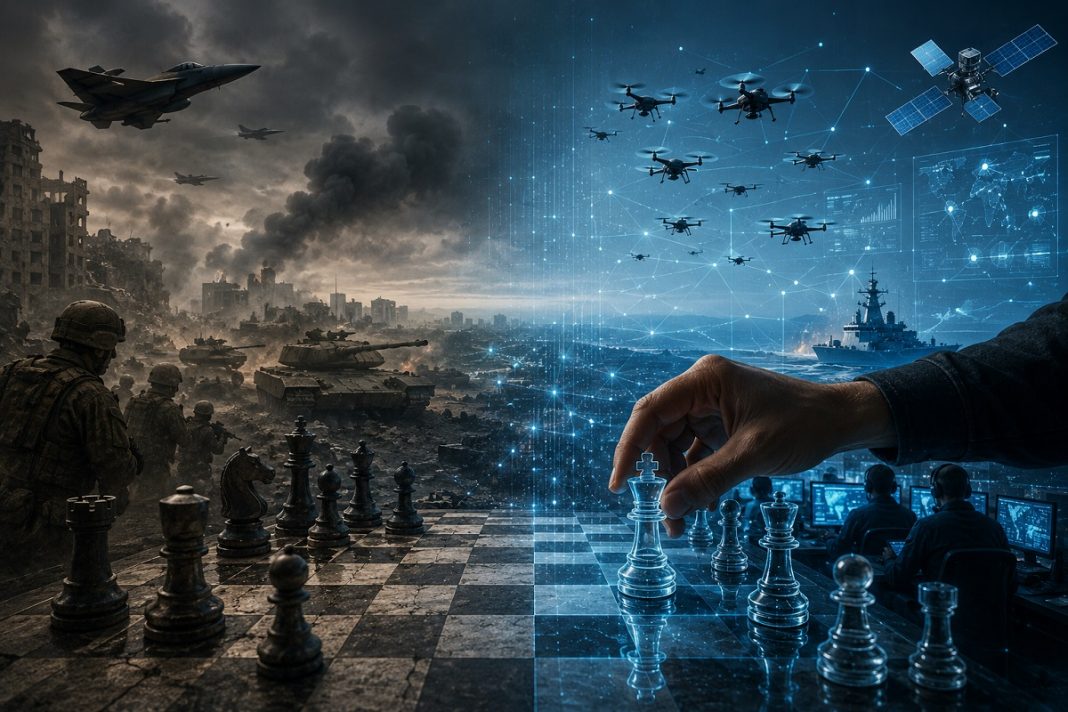
Military advantage is no longer determined solely by who possesses the most advanced weapons. It increasingly depends on which institution can absorb surprises, process information and modify its approach faster than its adversary.
The center of gravity is quietly moving from firepower to adaptability.
Technology accelerates this transformation, but it does not explain it. Artificial intelligence is not replacing military strategy. It is compressing time. Decisions that once unfolded over weeks must now be made in hours. Lessons that previous generations learned between wars must now be absorbed during them.
That changes the nature of preparedness itself.
Success will depend less on acquiring the perfect weapon than on building organizations capable of continuous learning. Military effectiveness will increasingly reflect institutional agility rather than simply industrial capacity.
This also blurs the traditional boundaries between civilian and military power. Software engineers, satellite operators, cybersecurity specialists, semiconductor manufacturers and logistics networks have become integral components of national defense. Military strength is no longer generated exclusively inside defense ministries. It increasingly emerges from an entire national ecosystem capable of innovation under pressure.
History has repeatedly shown that nations rarely lose because they possess fewer weapons. More often, they lose because they prepare for the next war by studying the last one.
That risk is growing.
The challenge confronting today’s armed forces is not merely acquiring new technologies. It is accepting that war itself has become an adaptive system whose rules evolve faster than institutions designed to master them.
The strongest military may still prevail in individual battles.
But the wars of the future are likely to favor something different: not the army with the largest arsenal, but the one that learns fastest, adapts quickest and abandons outdated assumptions before its adversaries do.
Power, in the twenty-first century, may no longer belong to the strongest military. It may belong to the most adaptable one.
This article was originally published in Arabic on the Asswak Al-Arab website