Gabriel G Tabarani
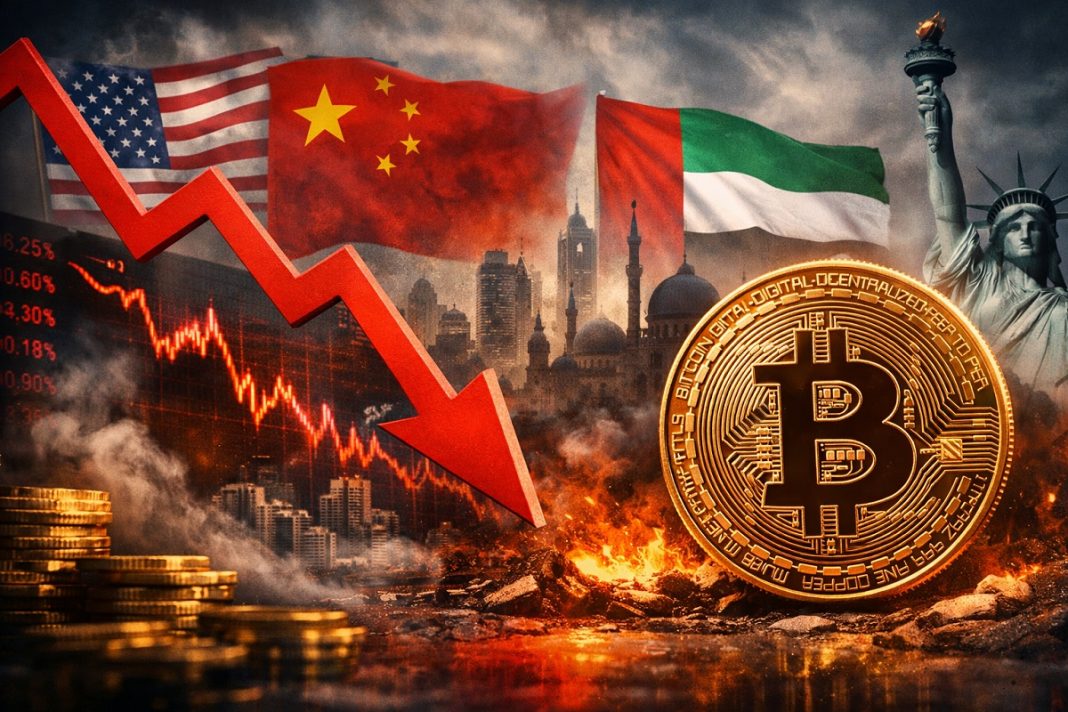
Bitcoin’s latest drop — a plunge of roughly 45 percent from its recent peak near $126,000 to around $69,000 — has erased more than $2 trillion from the global cryptocurrency market in a matter of months. For seasoned crypto investors, the volatility is familiar. For political leaders who once hinted they could steady or even steer the market, it is a bracing reminder of the limits of their reach.
During the 2024 campaign, Donald Trump promised to make the United States the “crypto capital of the planet.” As prices surged past $100,000, the symbolism was irresistible: a pro-crypto White House, friendlier regulators and a buoyant market seemingly moving in tandem. The implication, subtle but powerful, was that political endorsement could anchor a notoriously unstable asset.
The latest downturn suggests otherwise.
Since its creation in 2009 by the pseudonymous Satoshi Nakamoto, Bitcoin has moved in dramatic cycles. In 2017, it climbed to nearly $20,000 before losing more than 80 percent of its value the following year. In 2021, it approached $69,000, only to tumble below $16,000 in 2022 after the collapse of the crypto ecosystem built by Do Kwon and the spectacular failure of FTX, founded by Sam Bankman-Fried. Each crash felt existential. Each recovery revived the narrative of inevitability.
What distinguishes this cycle is the depth of institutional involvement. Exchange-traded funds tied to Bitcoin have drawn tens of billions of dollars in new inflows. BlackRock, the world’s largest asset manager, with more than $9 trillion under management, launched a spot Bitcoin fund that rapidly accumulated tens of billions in assets. Pension funds, hedge funds and retail investors can now gain exposure through familiar brokerage platforms.
This mainstreaming has strengthened crypto’s infrastructure. It has also tethered Bitcoin more tightly to the broader financial system. Over the past two years, its correlation with technology stocks — particularly the Nasdaq — has increased. When global liquidity is abundant and investors embrace risk, Bitcoin rallies. When central banks hold interest rates higher for longer, or growth stocks falter, crypto tends to fall in step.
In that sense, Bitcoin no longer trades as an isolated rebellion against the financial order. It behaves increasingly like a high-volatility technology asset, sensitive to the same macroeconomic forces that drive equities. The Federal Reserve’s posture, European growth data and geopolitical tensions now matter as much as, if not more than, any presidential pledge.
And the market itself is irreducibly global. Trading is continuous, spanning New York, Singapore, Hong Kong, London and Dubai. Asia accounts for a substantial share of transaction volume. Mining operations are dispersed across North America, Central Asia and the Middle East. Regulatory shifts in one jurisdiction can move prices instantly across continents. No single capital — not even Washington — commands the network.
The irony is stark. Bitcoin was conceived in the aftermath of the 2008 financial crisis as an alternative to government-managed money and bank-dominated finance. Its supply is capped at 21 million coins; more than 19 million have already been mined. Its protocol is decentralized. In theory, it resists political manipulation.
Yet over time, it has become entangled with the very institutions it sought to bypass. Asset managers package it into exchange-traded products. Public companies hold it on their balance sheets. Lawmakers debate regulatory frameworks. Some governments even contemplate holding it as part of national reserves.
This integration confers legitimacy. It may also reduce the risk of outright collapse. But it does not eliminate volatility. Scarcity alone does not prevent sharp drawdowns when expectations shift and investors rush to reduce exposure.
For global investors — from Silicon Valley to Singapore to the Gulf states, where interest in digital assets has grown rapidly — the lesson is less about ideology than about risk. Bitcoin can deliver extraordinary gains; it can also surrender half its value in months. It may have matured, but it has not been tamed.
The recent decline is not necessarily the end of the story. Previous crashes have given way to new highs. Developers continue to build. Institutional capital has not vanished. But the notion that political backing, even from the most powerful office in the world, can override market cycles has been tested — and found wanting.
Bitcoin remains what it has always been: a borderless, belief-driven asset whose price is set by millions of independent decisions, 24 hours a day. Presidents can endorse it. Regulators can shape its environment. Investors can embrace or shun it.
None of them, alone, can control it.
This article was originally published in Arabic on the Asswak Al-Arab website