Gabriel G Tabarani
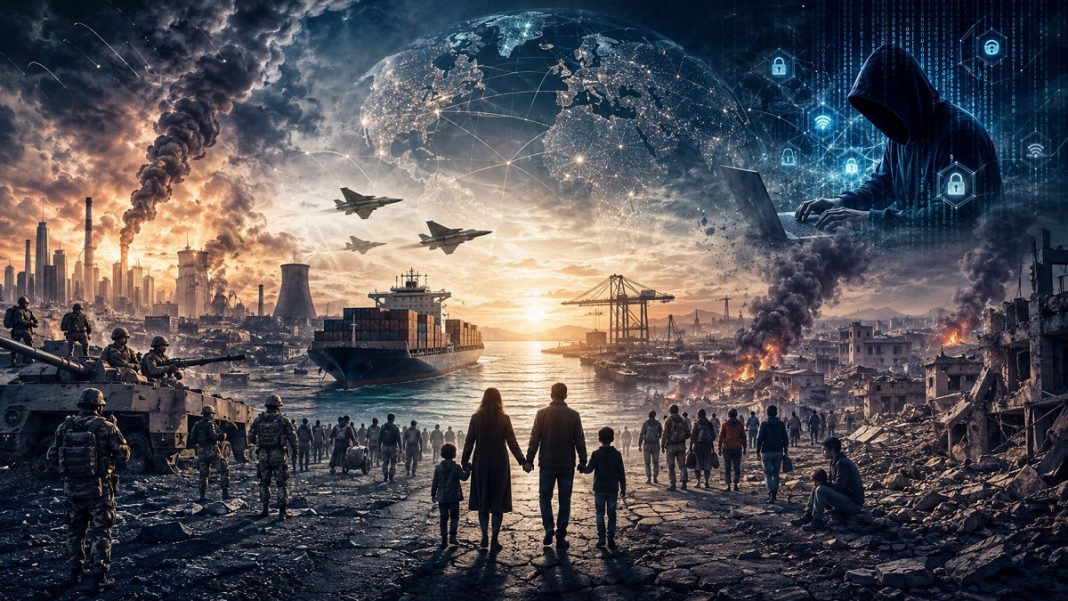
The modern world has never been more technologically advanced — and perhaps never more fragile. Wars today do not begin only with tanks crossing borders or fighter jets filling the sky. They may begin with a cyberattack that shuts down a power grid, a disruption in shipping lanes, soaring food prices or an energy crisis capable of destabilizing entire societies.
From Ukraine to Gaza and Lebanon, from the Red Sea to the Strait of Hormuz, the defining reality of the 21st century is becoming increasingly clear: instability is no longer the exception. It is becoming the global condition.
For decades after the Cold War, much of the world assumed that globalization, technological integration and open markets would gradually reduce the likelihood of major conflict. Concepts such as civil defense, societal preparedness and national resilience came to be viewed as relics of another era.
But recent years have shattered that illusion.
The war in Ukraine, the conflicts in Gaza and Lebanon, energy shocks, cyberwarfare and disruptions to global supply chains have exposed a far more vulnerable international system than many policymakers once imagined. The paradox of modernity is that while societies possess unprecedented technological and military capabilities, they have also become deeply dependent on interconnected systems that are increasingly exposed to disruption.
Security itself has changed.
It is no longer measured solely by the number of missiles, tanks or military bases a country possesses. Increasingly, it is defined by a society’s ability to function under sustained pressure — economically, psychologically and institutionally.
History offers important lessons. During the two World Wars, entire societies became part of national defense efforts. Factories shifted toward wartime production, governments introduced rationing systems and emergency planning, and civilian resilience became inseparable from military survival.
Yet modern societies may be even more vulnerable than those of the past.
Globalization generated enormous prosperity, but it also created unprecedented interdependence. A disruption in one strategic maritime corridor, energy network or supply chain can now trigger political and economic consequences far beyond its geographic origins.
Europe’s energy crisis following Russia’s invasion of Ukraine demonstrated how strategic dependence can quickly become national vulnerability. Likewise, attacks on commercial shipping in the Red Sea and tensions surrounding the Strait of Hormuz have shown how regional instability can affect global trade, inflation, energy prices and food security within weeks.
But modern insecurity extends beyond economics and energy.
The world is entering an era of hybrid conflict in which cyberattacks, disinformation campaigns and digital manipulation are becoming central tools of geopolitical competition. States no longer need to invade another country militarily to weaken it. Attacks on infrastructure, information systems and public trust can destabilize societies at a fraction of the cost of conventional warfare.
Social media has accelerated this transformation. While digital platforms have connected societies globally, they have also amplified polarization, misinformation and distrust in institutions. Internal fragmentation itself is becoming a strategic vulnerability.
These transformations are not limited to the West. In many ways, they are even more visible across the Middle East and the broader Arab world, where several societies are already living under the pressure of economic crises, regional conflicts and fragile political systems.
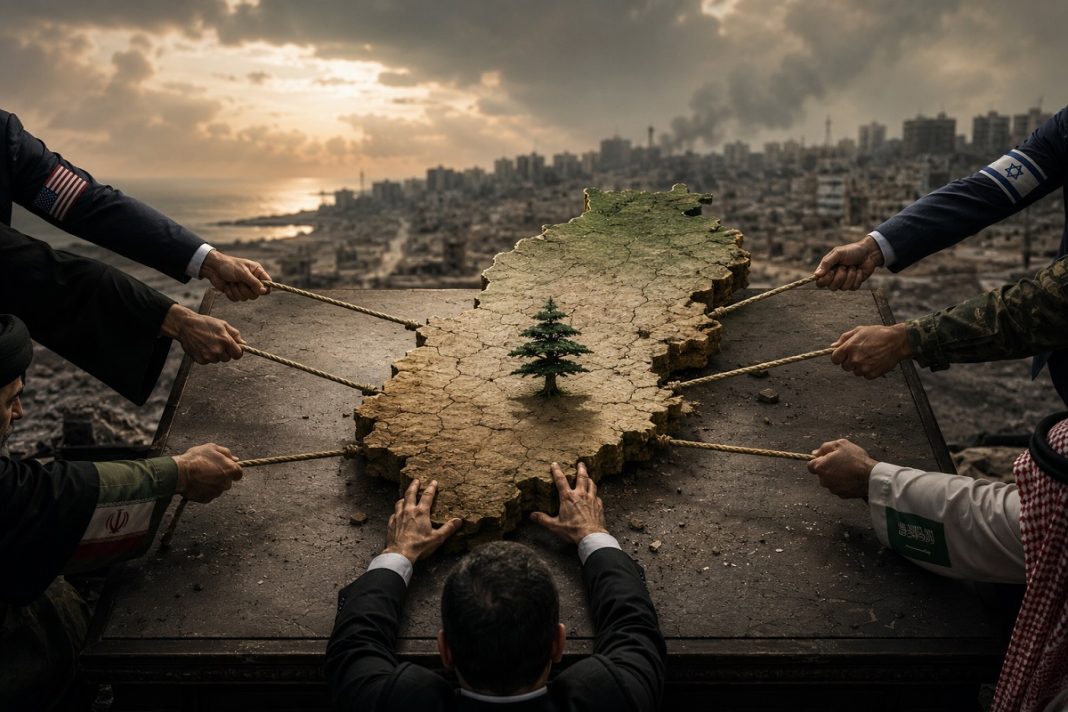
The wars in Gaza, Lebanon, Sudan and Yemen have demonstrated how prolonged conflict can devastate societies not only through direct violence, but through the collapse of healthcare systems, infrastructure and economic stability. Displacement, migration and social fragmentation increasingly become part of the conflict itself.
At the same time, disruptions in the Red Sea and tensions around global energy routes have highlighted how deeply Arab economies are tied to international trade networks and geopolitical balances, particularly countries heavily dependent on food imports, shipping routes and energy markets.
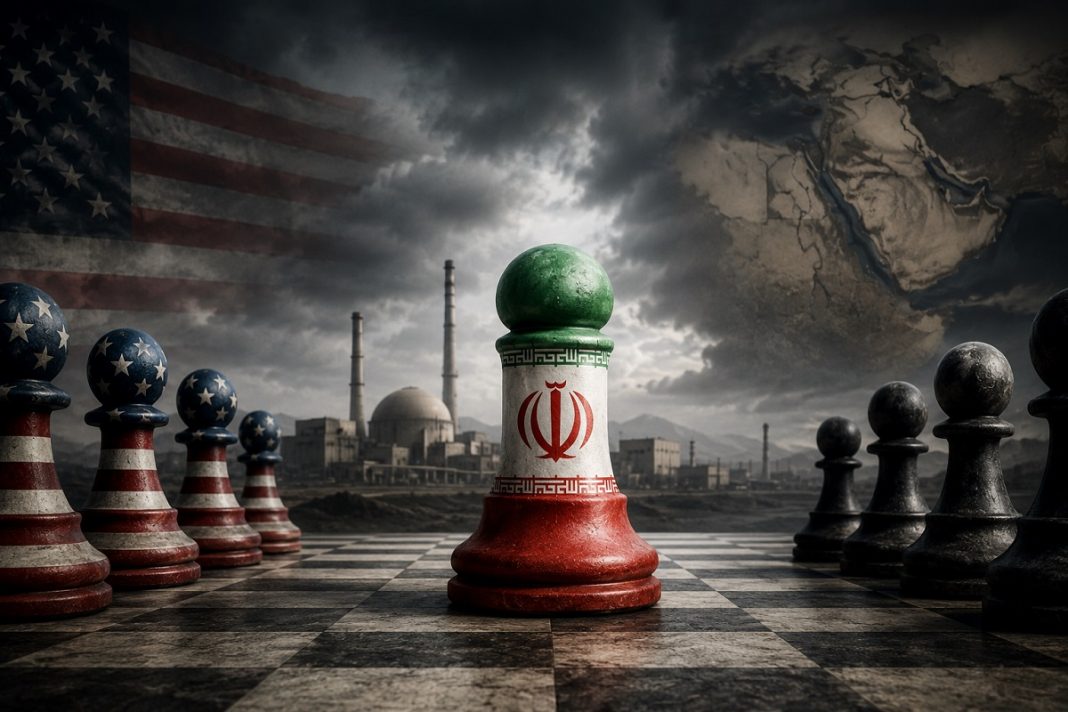
Iran offers another important example of the complexity of resilience under pressure. For more than four decades, the country has faced sanctions, political isolation and repeated regional tensions that profoundly affected living standards, the currency and the middle class. Yet those pressures did not produce state collapse. Instead, Iranian institutions and society developed various forms of economic and social adaptation.
But this resilience came at a significant cost: persistent inflation, widening inequality, brain drain and recurring waves of domestic unrest that reflect deep internal pressures beneath the surface of apparent stability.
This may be one of the defining geopolitical realities of the coming decades: societies rarely collapse only because of external attack. More often, they weaken gradually when they lose the ability to adapt, trust institutions and maintain internal cohesion.
The problem is that many political systems remain trapped in short-term thinking. Investments in infrastructure, education, civil preparedness and long-term planning are frequently postponed because they do not produce immediate political gains.
Yet prolonged crises expose the fragility hidden beneath apparent stability.
And the threats themselves are increasingly interconnected. Climate change intensifies migration pressures and resource competition. Economic instability fuels populism and extremism. Regional wars affect global energy markets and financial systems. Artificial intelligence may soon transform information warfare in ways governments are only beginning to understand.
In this changing world, resilience is no longer an abstract intellectual concept. It is becoming a core component of national security.
A society capable of enduring economic, psychological and institutional pressure is less vulnerable to coercion, collapse and fragmentation.
The greatest danger today may be that much of the world still behaves as though stability is permanent, despite mounting geopolitical and economic evidence to the contrary.
History suggests otherwise.
Societies rarely fall all at once. More often, they erode gradually when they lose the capacity to adapt to profound transformations.
The defining question of the coming era may therefore not be which country possesses the strongest military, but which societies are most capable of enduring when instability itself becomes the global norm.
And in a world where political and economic certainties are steadily eroding, survival may belong not only to the militarily powerful, but to the societies most capable of remaining cohesive when everything around them begins to shake.
This article was originally published in Arabic on the Asswak Al-Arab website