Gabriel G Tabarani
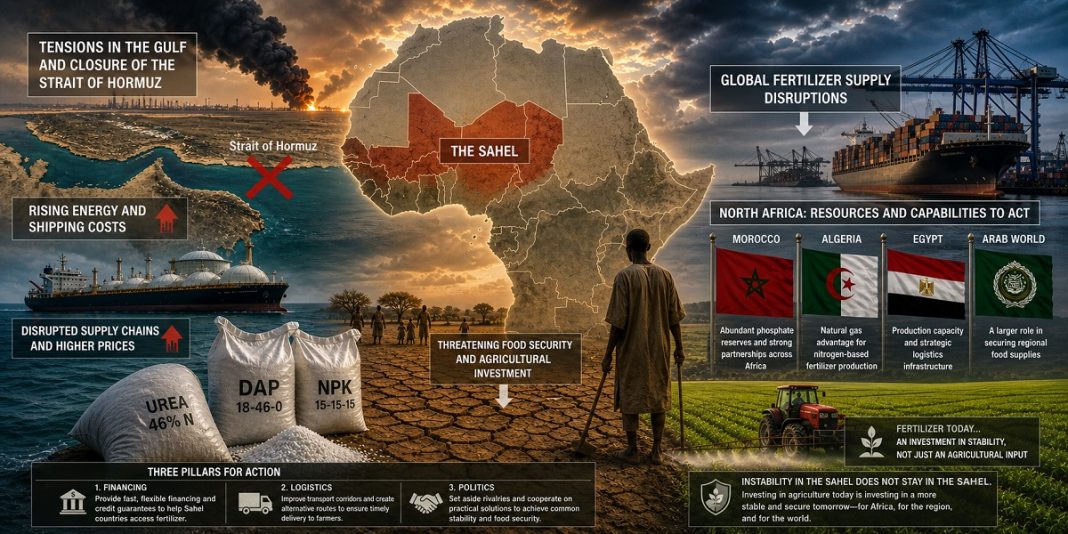
Global crises rarely begin where their consequences are ultimately felt. Today’s disruption in fertilizer markets—triggered in part by tensions in the Gulf and the closure of the Strait of Hormuz—is a case in point. What appears as a supply-chain disturbance in one of the world’s most strategic chokepoints is quickly cascading into a food security risk thousands of miles away, particularly across Africa’s Sahel.
Fertilizer, long treated as a technical input, has become something more consequential: a strategic commodity. When its flow is disrupted, the effects are neither immediate nor evenly distributed—but they are profound. In fragile agricultural systems, especially those dependent on short rain-fed growing seasons, timing is everything. A delay of weeks can mean the difference between a viable harvest and a failed one.
Nowhere is this more evident than in the Sahel (Africa). Farming systems there operate on narrow margins, shaped by erratic rainfall, limited infrastructure, and heavy reliance on imported inputs. Rising fertilizer prices and delayed shipments do not simply strain budgets—they undermine production itself. In such contexts, supply shocks translate directly into food insecurity, and food insecurity into political risk.
But this is not just a story of vulnerability. It is also a test of regional agency.
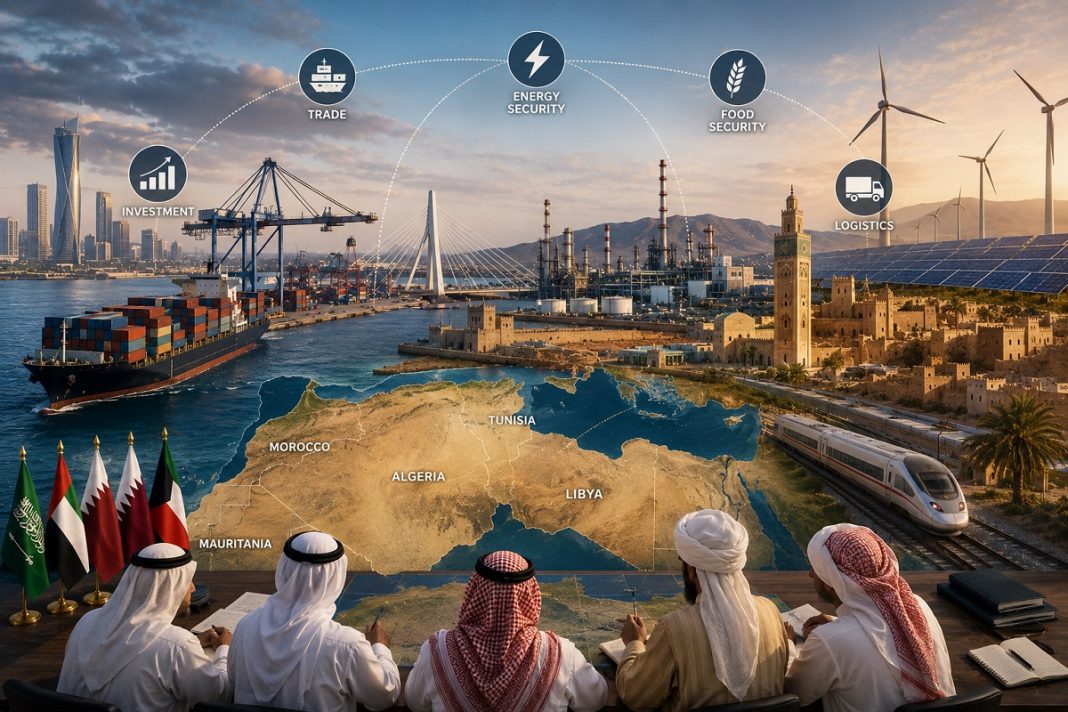
North Africa—particularly Morocco, Algeria, and Egypt—occupies a unique position in the global fertilizer ecosystem. While exposed to the same disruptions, these countries possess industrial capacity, logistical infrastructure, and geographic proximity that could allow them to mitigate the shock.
Morocco, for instance, sits atop the world’s largest phosphate reserves and has built an extensive agricultural footprint across Africa through OCP Group. Algeria, meanwhile, leverages its natural gas reserves to produce nitrogen-based fertilizers at scale. Egypt adds another layer, combining production capacity with strategic control over key trade routes linking the Mediterranean and the Red Sea.
Individually, these are significant assets. Collectively, they could form a stabilizing system.
Yet that potential remains largely untapped.
The constraint is not capacity—it is coordination.
North African states continue to approach regional crises through fragmented, nationally bounded strategies. Political rivalries, particularly between Morocco and Algeria, have long limited meaningful cooperation. But the current moment raises a more urgent question: if a disruption of this magnitude cannot compel pragmatic coordination, what will?
The stakes extend well beyond agriculture. Instability in the Sahel has historically spilled northward—through migration pressures, expanding informal economies, and the growing reach of armed groups. Supporting agricultural production in the region, including through fertilizer access, is therefore not merely a humanitarian gesture. It is a form of preventive security policy.
Addressing the crisis, however, requires more than recognition—it demands action across three fronts.
First, financing. Sahelian economies, already strained by currency weakness and debt, face mounting barriers to importing essential inputs. Without access to trade finance and credit guarantees, even available supplies cannot reach those who need them. Institutions such as the World Bank and the African Development Bank have a critical role to play in bridging this gap, but speed and flexibility will be essential.
Second, logistics. Fertilizer that cannot move is fertilizer that might as well not exist. Infrastructure constraints, security risks, and fragmented transport networks complicate delivery into the Sahel. Here, Egypt’s logistical position and Morocco’s Atlantic-facing initiatives could offer alternative corridors—but only if aligned within a broader regional strategy.
Third, politics. This remains the hardest challenge. Regional frameworks exist—from the Union for the Mediterranean to smaller groupings such as the 5+5 Dialogue—but their effectiveness depends less on formal structures than on political will. What is required is not grand integration, but targeted, functional cooperation focused on immediate priorities.
Europe, too, has a stake in this outcome. Sahelian instability is closely linked to migration flows and broader security concerns. Yet external actors cannot substitute for regional leadership. At best, they can support it—financially, diplomatically, and logistically.
For the wider Arab world, the implications are equally significant. Many countries remain highly dependent on imported food and vulnerable to upstream disruptions—whether in energy, fertilizers, or grain. At the same time, parts of the region possess the resources and infrastructure to play a more active role in securing supply chains. The question is no longer how exposed these economies are, but whether they are prepared to act on that exposure.
In the end, this is not simply a fertilizer crisis. It is a test of whether regions can move from passive exposure to active management of systemic risk.
North Africa does not lack the means to influence outcomes. What it has yet to demonstrate is the willingness to use them collectively.
If the Sahel now stands on the brink of a food security emergency, the real risk is not just the crisis itself—but the failure to act while there is still time to contain it.
This article was originally published in Arabic on the Asswak Al-Arab website