Gabriel G. Tabarani
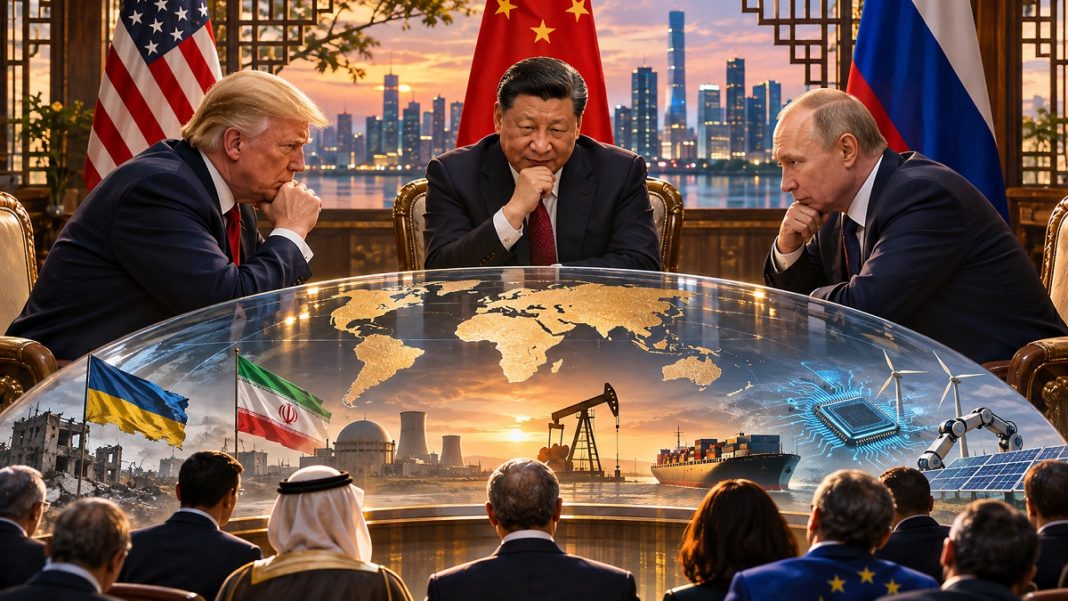
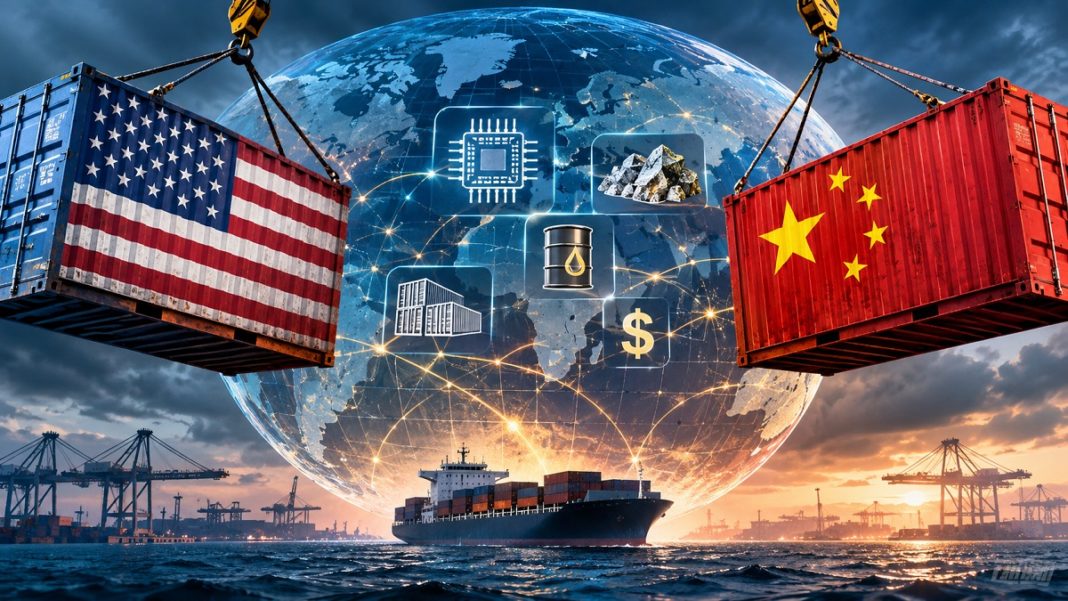
In their determination to protect their economies from foreign threats, the world’s major powers risk undermining the very international system on which their prosperity depends. The United States is restricting China’s access to advanced technologies in the name of national security. China is using its dominance in rare-earth processing to defend its interests and retaliate against American pressure. Europe, meanwhile, is struggling to reduce its dependence on both. Economic security, once understood as a safeguard against instability, is increasingly becoming a source of instability itself.
The problem is not that governments want to protect critical industries or secure essential supplies. It is that economic interdependence is being transformed into an instrument of geopolitical coercion. Globalisation encouraged countries to specialise, lower production costs and build intricate networks of trade, finance and technology. Those networks generated enormous wealth. But they also created vulnerabilities that governments now regard as potential threats to their sovereignty.
In a recent Foreign Affairs essay, Henry Farrell, Abraham Newman and Yeling Tan describe this predicament as the “chokepoint trap”. As countries seek to control critical nodes of the global economy, or shield themselves from the leverage others possess, they provoke defensive measures and retaliation. What begins as an effort to strengthen national security can become a collective race for economic weapons, leaving everyone more exposed.
The confrontation between Washington and Beijing illustrates the danger. The United States regards restrictions on advanced semiconductor exports as necessary to prevent sensitive technologies from strengthening a strategic rival. China sees those restrictions as an attempt to contain its economic and technological development. Beijing responds by accelerating domestic innovation and exploiting its position in supply chains for critical minerals. Each side interprets its own actions as defensive and the other’s as threatening.
The consequences extend well beyond the two superpowers. European and Asian companies that depend on American technology and Chinese materials increasingly face conflicting regulations, uncertain access to supplies and difficult investment decisions. Choosing a supplier or entering a new market is no longer simply a commercial calculation. It can become a geopolitical commitment.
The costs are not confined to tariffs, sanctions or export controls. They also emerge through reduced confidence, duplicated investment, higher production costs and lost opportunities. The International Monetary Fund has warned that severe geoeconomic fragmentation could, under some scenarios, reduce global output by as much as 7 per cent over the long term. This is not a loss that has already occurred, but an indication of the economic damage that could follow if rivalry hardens into permanent division.
Yet globalisation is not necessarily coming to an end. Trade continues, multinational companies still depend on international markets, and even the largest economies cannot achieve complete self-sufficiency. What is changing is the logic governing economic relationships. Efficiency is increasingly being subordinated to security. Governments are asking not only where goods can be produced most cheaply, but who might be able to cut off their supply during a political crisis.
For Arab economies, this shift presents a particularly difficult challenge. The region maintains extensive ties with the United States in finance, technology and security; with China in trade, manufacturing and energy; and with Europe in investment, markets and regulation. These relationships can be a source of strength. They can also become vulnerabilities if Arab governments are forced to choose between competing economic blocs.
The answer is not to replace dependence on Washington with dependence on Beijing, or vice versa. Trading one form of reliance for another does little to strengthen economic sovereignty. What matters is the ability to diversify partnerships, develop domestic capabilities and preserve room for independent decision-making.
The Gulf states are especially well placed to pursue such a strategy. Their importance extends beyond oil and gas. They are major investors, trading partners and increasingly ambitious participants in logistics, manufacturing and digital infrastructure. Their relationships with multiple global powers give them opportunities to exercise influence rather than merely absorb the consequences of great-power competition.
But financial resources alone do not guarantee strategic autonomy. Attracting foreign technology companies is not the same as developing technological capabilities. Building advanced industrial facilities does not necessarily eliminate dependence on imported expertise, equipment or intellectual property. Genuine resilience requires investment in skills, research, institutions and productive capacity.
Arab governments should therefore focus on identifying their most consequential economic vulnerabilities rather than pursuing the illusion of comprehensive self-sufficiency. The objective should not be to produce everything domestically, but to ensure reliable access to what cannot be replaced. Diversifying suppliers, strengthening local capabilities and developing contingency arrangements for disruptions in trade, finance and technology would offer more practical protection.
Regional economic co-operation could make these efforts considerably more effective. Fragmented Arab markets weaken the region’s collective bargaining power. Greater integration in energy, transport, food security, technology and logistics could help countries negotiate with external partners from a position of greater strength. The aim should not be to create a closed economic bloc, but to build a more connected regional economy capable of engaging with the world on its own terms.
The major powers also bear responsibility. Economic security cannot rest indefinitely on coercion and retaliation. Just as the Cold War eventually produced mechanisms to manage military confrontation, today’s increasingly weaponised global economy needs understandings that limit escalation and protect essential economic relationships. Such arrangements would not eliminate strategic rivalry, but they could prevent every political dispute from becoming a wider economic crisis.
The central challenge is not to ensure that every country can disrupt the interests of its rivals. It is to preserve enough trust and predictability for mutually beneficial relationships to survive political disagreement. For Arab economies, the most sensible course is not to join the race to control global chokepoints, but to build the resilience needed to withstand their weaponisation.
Economic security achieved at the expense of everyone else’s security is unlikely to endure. If the major powers continue turning global interdependence into a battlefield, they may discover that the instruments designed to protect their prosperity have become among its greatest threats.
This article was originally published in Arabic on the Asswak Al-Arab website