Gabriel G Tabarani*
The Sept. 10 drone attack on Saudi Arabia’s East-West oil pipeline was more than another strike on the kingdom’s energy infrastructure. The drones came from Iraq and hit an artery built to reduce one of Saudi Arabia’s most dangerous geographic vulnerabilities: its dependence on the Strait of Hormuz.
That is what makes this attack different. Saudi Arabia’s problem is no longer that it lacks alternatives. It is that the war is beginning to follow those alternatives.
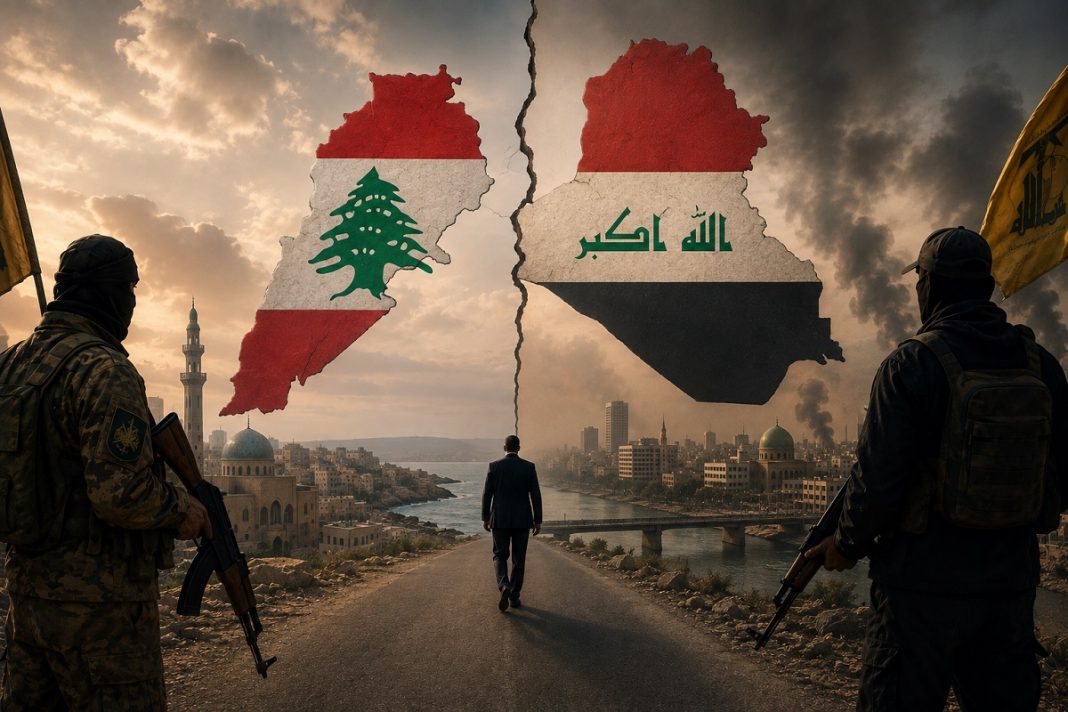
Baghdad confirmed that the attack originated from Iraqi territory and dismissed the operations commander in Maysan Province. Saudi Arabia could have responded with another military strike inside Iraq, particularly after demonstrating in July that it was prepared to use force when attacks were launched from Iraqi soil.
This time, however, Riyadh held its fire. At the request of the Iraqi prime minister, it gave Baghdad time to act while making clear that Saudi Arabia retained the right to take whatever measures were necessary to protect its territory and infrastructure.
This is not a return to the kingdom’s old policy of restraint. It is better understood as a form of conditional deterrence. Riyadh has shown that it is willing to strike, but it does not want every attack to open another front. It is trying to distinguish between the armed groups threatening Saudi Arabia and the Iraqi state from whose territory they operate.
The nature of the target makes that calculation especially difficult.
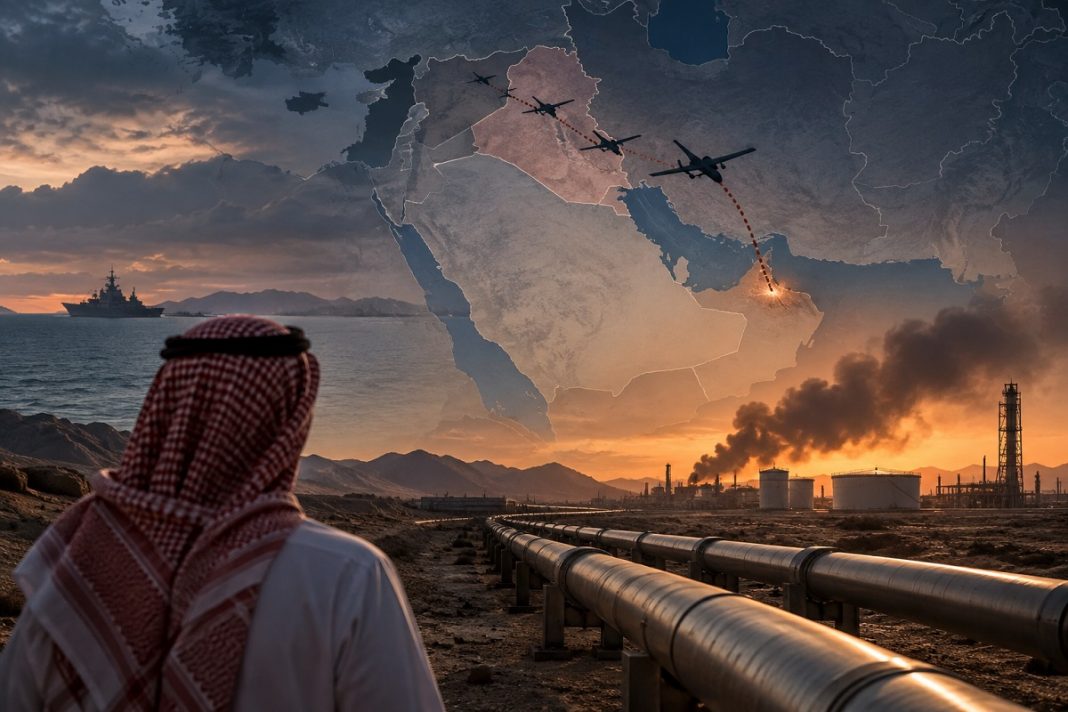
The East-West pipeline carries oil roughly 750 miles from Saudi Arabia’s Eastern Province to Yanbu on the Red Sea, bypassing Hormuz. As the war has severely disrupted traffic through the strait, the pipeline has become much more than a piece of domestic energy infrastructure. It is one of the kingdom’s principal strategic escape routes from the vulnerability of Hormuz.
The attackers, in other words, were not simply targeting a pipeline. They were targeting Saudi Arabia’s alternative to Hormuz.
That exposes a larger paradox. For decades, Saudi Arabia has invested in options designed to reduce its exposure to geographic chokepoints. If the Gulf route becomes dangerous, oil can be moved westward to the Red Sea. If one facility is threatened, other infrastructure and export routes can provide redundancy.
But escaping one chokepoint does not necessarily eliminate vulnerability. It may simply move it somewhere else.
That is what the current war is demonstrating.
To the east lies Hormuz, where shipping has been severely disrupted. To the south and west, the Red Sea and Bab el-Mandeb face mounting pressure from the Houthis. And to the north, the latest attack has demonstrated that drones launched from Iraq can reach the infrastructure designed to reduce Saudi dependence on its eastern maritime route.
There does not need to be a single command center coordinating all these pressures for their strategic effect to be significant. The result is the same: Saudi Arabia’s options become narrower and more expensive to protect.
The kingdom can buy more air defenses, disperse critical infrastructure, expand pipeline capacity and redirect exports. What it cannot do is change its geography.
As alternative routes come under pressure simultaneously, the conflict ceases to be simply about defending individual oil facilities. It becomes a test of whether Saudi Arabia can keep the networks that sustain its economy functioning when threats emerge from several directions at once.
Iraq matters within this equation for a different reason.
For Riyadh, the problem is not merely that armed groups can use Iraqi territory to attack Saudi Arabia. Repeated Saudi military action inside Iraq could eventually turn the country itself into a permanent front — precisely the outcome Saudi policy has spent much of the past decade trying to avoid.
Riyadh has invested in trade, political engagement and economic ties in the hope that a stronger Iraqi state would have greater room to maneuver beyond Iran’s influence. Regular Saudi strikes inside Iraq might destroy drones and launch sites, but they could also weaken the government Riyadh wants to strengthen, reinforce militia claims that their weapons are needed to defend Iraqi sovereignty and drag Saudi-Iraqi relations back toward confrontation.
This is why conditional deterrence matters.
The Saudi message to Baghdad is not that attacks launched from Iraqi territory will be tolerated. It is, rather: You have an opportunity to stop the threat before we have to stop it ourselves.
That distinction is strategically important. Military force can destroy a launcher or a drone depot. It cannot by itself create an Iraqi state capable of preventing its territory from being used against its neighbors. Used too aggressively, outside force can even weaken the institutions Saudi Arabia ultimately needs to assume that responsibility.
Baghdad’s investigation and the dismissal of the Maysan operations commander are therefore only a beginning. The real test is not whether Iraq can determine who enabled the last attack. It is whether it can prevent the next one.
But the Saudi challenge extends far beyond Iraq.
The attack on the East-West pipeline demonstrates that strategic depth cannot be measured simply by how many alternatives a country possesses. It must also be measured by whether those alternatives remain usable when several of them come under pressure at the same time.
The route that provides an escape from today’s crisis can become the target of tomorrow’s.
That may be the most consequential lesson of this war for Saudi Arabia. The kingdom is no longer confronting a threat from a single direction that can be managed through stronger defenses or a larger military alliance. It is confronting a network of pressures that exploits geography itself: Hormuz to the east, the Red Sea and Bab el-Mandeb to the west and south, and Iraq to the north.
Seen this way, Riyadh’s decision not to retaliate immediately against the latest attack is more complicated than restraint. Saudi Arabia needs to deter those attacking it without adding another permanent front to the ones already surrounding it. It needs to protect the East-West pipeline while keeping the Red Sea viable. And it needs to pressure Baghdad without turning Iraq back into an adversary.
Saudi Arabia built the East-West pipeline so that its exports would not remain hostage to Hormuz. It strengthened its position on the Red Sea so that it would have another gateway to global markets. But this war is demonstrating that building alternatives is not the end of strategy. It is only the beginning.
The real measure of strategic power is the ability to keep options open when an adversary is trying to close them one by one.
From Hormuz to the Red Sea, and from Maysan to Yanbu, geography is no longer merely the stage on which this war is being fought.
It has become one of its weapons.
This article was originally published in Arabic on the Asswak Al-Arab website