Gabriel G. Tabarani
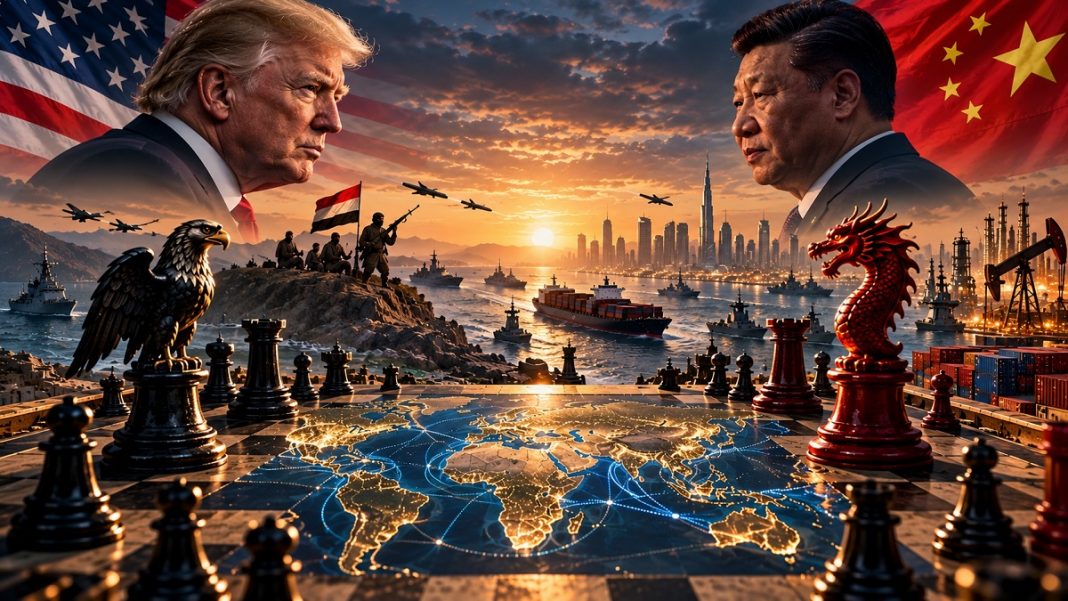
The United States possesses the world’s most formidable military, commands an extraordinary network of alliances and retains enormous influence over international finance and technology. China, meanwhile, is steadily expanding its economic reach and diplomatic ambitions. Yet beneath this familiar competition lies a paradox that may define the international order for decades to come: The world’s leading powers have never commanded such sophisticated instruments of influence, but their ability to control the consequences of using them is increasingly uncertain. They can impose sanctions, deploy military force and reshape commercial relationships, yet they cannot always compel adversaries to change course, persuade allies to follow their lead or prevent smaller actors from disrupting their plans.
This is not evidence that American leadership is approaching its inevitable end, or that Chinese dominance is waiting to replace it. Rather, it suggests that the nature of international power is changing in ways that conventional geopolitical thinking has struggled to accommodate. Since the Cold War, Washington has occupied an exceptional position in the global economy, international institutions and security arrangements. Those advantages remain substantial, but influence is increasingly exercised through overlapping networks of trade, finance, technology and regional partnerships that no government can fully command. The emerging order is therefore neither a simple transfer of supremacy from Washington to Beijing nor a return to the rigid divisions of the twentieth century. It is a more intricate system in which major powers compete, smaller states seek greater room for maneuver and nonstate actors acquire an unsettling capacity to shape events far beyond their immediate surroundings.
The Red Sea offers a revealing illustration. Yemen’s Houthis, once primarily a force in a domestic conflict, have demonstrated their ability to threaten international shipping and raise the economic and military costs of protecting a vital maritime corridor. Iranian assistance, particularly in weapons, technology and military expertise, has been central to the development of their capabilities, alongside locally accumulated experience and adaptable networks of procurement and financing. But the Houthis’ ability to sustain disruption should not be confused with strategic victory or immunity from military pressure. What it reveals is the difficulty of confronting organizations that can disperse their resources, replace disrupted connections and regenerate some capabilities after suffering significant losses. Airstrikes can destroy launch sites and weapons depots, while sanctions can obstruct financial and logistical channels. Neither, by itself, necessarily resolves the political conditions or dismantles the wider networks that allow the threat to persist.
The lesson is not that military superiority has become irrelevant. Deterrence, intelligence, maritime protection and the ability to use force remain indispensable. Rather, the distinction between inflicting damage and securing a durable political outcome has become increasingly important. A similar distinction applies to economic power. The dollar remains dominant in global finance, American institutions retain exceptional influence and the United States continues to lead in crucial areas of innovation. Nevertheless, diversified supply chains, China’s commercial expansion and the development of complementary financial arrangements have given some governments additional options. These developments do not herald the imminent collapse of the dollar-based system or the emergence of a coherent alternative. They do, however, complicate the assumption that financial leverage will always produce the political results its users expect.
China’s rise must be understood against this changing landscape. Beijing undoubtedly seeks greater influence and a reduced American capacity to determine international priorities unilaterally. Yet it also benefits enormously from the markets, institutions and rules of the existing order. Through economic partnerships, diplomatic engagement and initiatives such as its Global Security Initiative, China is attempting to expand its role in shaping international affairs rather than simply constructing an entirely separate world system. That ambition raises legitimate concerns, including those surrounding regional coercion, surveillance technologies and authoritarian practices. But treating every Chinese initiative as an effort to overthrow the international order risks obscuring the distinction between competition for influence and a wholesale rejection of existing institutions.
For many countries, that distinction is essential because they have little desire to choose between Washington and Beijing. Across Southeast Asia, governments maintain extensive commercial relationships with China while preserving varying degrees of security cooperation with the United States and its partners. Their objective is not necessarily to exchange one dominant power for another, but to prevent either from acquiring excessive control over their strategic choices. This balancing act is becoming harder as competition intensifies over advanced technology, communications infrastructure, trade restrictions and supply chains. Strategic autonomy, in other words, does not mean escaping great-power rivalry. It means developing the capacity to manage its pressures while preserving as much freedom of action as possible.
Nowhere is this calculation more consequential than in the Arabian Gulf, where traditional security concerns intersect with profound economic and technological transformation. The Gulf states continue to depend on important aspects of American military, intelligence and technological cooperation, particularly in a region exposed to persistent instability and threats to energy infrastructure and maritime commerce. At the same time, they are expanding economic ties with China, cultivating additional international partnerships and investing in industrial diversification, advanced technology and domestic defense capabilities. These policies should not automatically be interpreted as a retreat from Washington’s security orbit. They reflect a recognition that external protection, however valuable, cannot substitute for the economic resilience, technological competence and national capabilities required to navigate an increasingly unpredictable international environment.
Yet diversification is not a guarantee of independence. Technological cooperation with China can create tensions with Washington over sensitive communications systems and defense integration, while deep exposure to international markets leaves Gulf economies vulnerable to sanctions, trade disputes and supply-chain disruptions. Genuine strategic autonomy therefore requires more than multiplying diplomatic relationships. It demands sustained investment in research, education, cybersecurity, advanced industries and defense capabilities, alongside stronger regional cooperation to protect maritime routes, critical infrastructure and energy security. The goal is not to dispense with external partnerships, but to ensure that those partnerships are choices supported by domestic strength rather than necessities dictated by vulnerability.
Nor should a more dispersed distribution of power be mistaken for a more peaceful or equitable world. Greater freedom of maneuver for middle powers may coexist with sharper geopolitical pressures, while fragmented authority can give armed groups opportunities to exploit international divisions. Institutions may struggle to produce settlements when powerful governments find it easier to obstruct one another than to cooperate. The danger is that the distribution of influence could change faster than the rules and institutions needed to manage it. A world beyond the control of any single power is not necessarily a world governed by shared restraint.
This places responsibilities on Washington and Beijing alike, although their positions and capabilities differ considerably. The United States remains uniquely equipped to contribute to international stability through its military reach, economic strength, alliances and institutions of innovation. Sustaining that role, however, requires more than demonstrating the capacity to compel. It requires credible commitments, attractive partnerships and a willingness to recognize that allies and partners have interests of their own. China faces a corresponding test: Commercial influence does not automatically confer political legitimacy, and appeals to sovereignty and cooperation will carry little weight if they are contradicted by pressure on smaller states.
The question of who rules the world can no longer be answered simply by comparing military arsenals or economic output, important as both remain. Influence will increasingly depend on how power is exercised, whether partnerships produce mutual benefits and whether competing states can sustain rules that restrain conflict. For the Gulf, the opportunity lies not in replacing one powerful partner with another, but in acquiring the capabilities and choices necessary to protect its interests amid their rivalry. For the great powers, the challenge is not to prove that they can influence the world, but to recognize the limits of their ability to control it. The world does not lack powerful nations. What it increasingly lacks are rules capable of ensuring that their power produces stability rather than disorder.
This article was originally published in Arabic on the Asswak Al-Arab website