Gabriel G. Tabarani
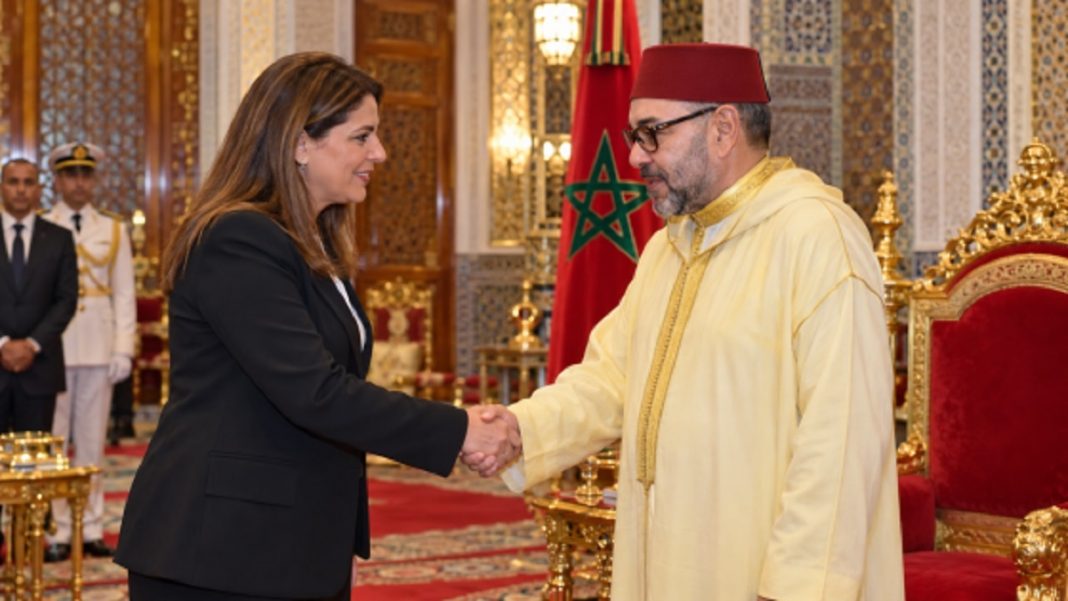
Morocco made political history on September 29, 2026. King Mohammed VI received Fatima Zahra Mansouri at the Royal Palace in Rabat, appointed her Head of Government and asked her to form a new cabinet under Article 47 of the Constitution. For the first time since independence, a woman would lead the Moroccan government.
But to describe the moment simply as the arrival of Morocco’s “first woman” Head of Government is to miss much of its significance.
Mansouri was not elevated to office in a gesture detached from the political process. The Authenticity and Modernity Party, or PAM, which she helps lead through a collective leadership, came first in the September 23 parliamentary elections, winning 97 of the 395 seats in the House of Representatives. Under Article 47, the king appoints the Head of Government from the party that finishes first in parliamentary elections.
That distinction matters. A woman did not reach Morocco’s highest government office merely because the state decided to open a door. She reached it because her party came first at the ballot box.
Mansouri is no newcomer to politics. A lawyer by training, she was among the founders of PAM in 2008, became mayor of Marrakesh in 2009, served in parliament, returned to the mayoralty in 2021 and served as minister responsible for national territory planning, urban planning, housing and city policy before becoming Head of Government.
Her path, then, did not begin at the Royal Palace on the day of her appointment. It ran through municipal government, parliament, party politics, a cabinet ministry and elections.
That may be the more important story Morocco is telling about women and political power.
Appointing a woman as a minister, ambassador or senior official can be symbolically important. Something deeper happens when a woman becomes a natural contender for the highest levels of political power — when she contests elections, leads a party, negotiates coalitions and is judged not primarily as a woman in politics, but as a politician.
For a Moroccan girl, the significance is easy to understand. She can now look at the office of Head of Government and know that it is not, by definition, beyond her reach. Once a political ceiling has been broken, what was once unimaginable becomes possible, and what was exceptional can eventually become normal.
But symbolism has limits. Mansouri made history by reaching the office; she cannot govern on history.
Morocco faces difficult questions about employment, purchasing power, education, healthcare and social and regional inequalities. Voter turnout in the latest election fell to about 38 percent, from roughly 51 percent in 2021, raising a broader question about confidence in political institutions.
The country is also preparing to co-host the 2030 FIFA World Cup with Spain and Portugal, bringing enormous infrastructure investment and international attention. Yet Moroccans will inevitably ask whether that transformation will also be felt in their schools, hospitals, neighborhoods and household budgets.
After the historic photographs and headlines, Mansouri will therefore face the same questions as any Head of Government. What will happen to youth unemployment? Will public services improve? Will economic growth translate into opportunity? Will regional inequalities narrow? Will citizens feel that politics can make a tangible difference in their lives?
Judging her by those standards does not diminish the significance of her appointment. It is, in fact, another form of equality.
The meaning of the moment also extends beyond Morocco, although it should be kept in perspective. Mansouri is not the first woman to head a government in Africa or the Arab world. Tunisia’s Najla Bouden became the first woman to head an Arab government in 2021, and African countries have had women in the highest positions of government and state.
The important question today is therefore no longer who will be the next “first woman.” It is whether such breakthroughs can cease to be exceptional.
Morocco is particularly interesting because it belongs simultaneously to the Arab, African and Mediterranean worlds. Its economic presence across Africa has expanded, its ties with Europe are deep, and it remains firmly embedded in the Arab political and cultural sphere. The image it projects therefore travels beyond its borders.
For the Arab world, the message need not be wrapped in grand rhetoric about women’s empowerment. It is simpler: there is no political or institutional reason why heading a government should be a male preserve.
Arab women long ago demonstrated their ability to lead businesses, universities, ministries and major institutions. Yet their presence at the summit of political power remains rare. Morocco does not close that gap by appointing one woman. But it makes one of the assumptions that sustained it harder to defend.
There is also an African dimension. Rabat has spent years expanding its economic footprint across the continent through banking, telecommunications, fertilizers, energy and infrastructure. Having a woman lead the government adds a political and social dimension to Morocco’s growing African profile and potentially to its soft power.
Yet one woman at the top does not make a country a model of equality. The composition of Mansouri’s government will matter, as will women’s presence in public administration, business and elected institutions, and the policies affecting their employment, social protection and economic opportunities.
A symbol opens a door. Politics determines what lies beyond it.
There is a final reason why this moment matters. Morocco’s 2011 Constitution strengthened the role of elected institutions within the constitutional monarchy, and Article 47 requires the king to appoint the Head of Government from the party that comes first in elections to the House of Representatives. In Mansouri’s case, a social breakthrough and a constitutional mechanism converged: her party finished first, and the king appointed her accordingly.
It is a reminder that societies do not change only through rupture and confrontation. They can also change from within their institutions, as the range of people able to occupy positions once reserved for others gradually expands.
Mansouri’s greatest achievement, ultimately, would be not to remain in history simply as Morocco’s “first woman” Head of Government. If her government succeeds, the conversation years from now will be less about her gender than about what her government accomplished. At that point, the precedent will have become something more important: a path.
Morocco wrote a new page in its political history on September 29. But history does not create jobs, lower prices, improve schools or repair hospitals.
Fatima Zahra Mansouri made history the moment she was appointed.
From that moment on, politics began.
This article was originally published in Arabic on the Asswak Al-Arab website