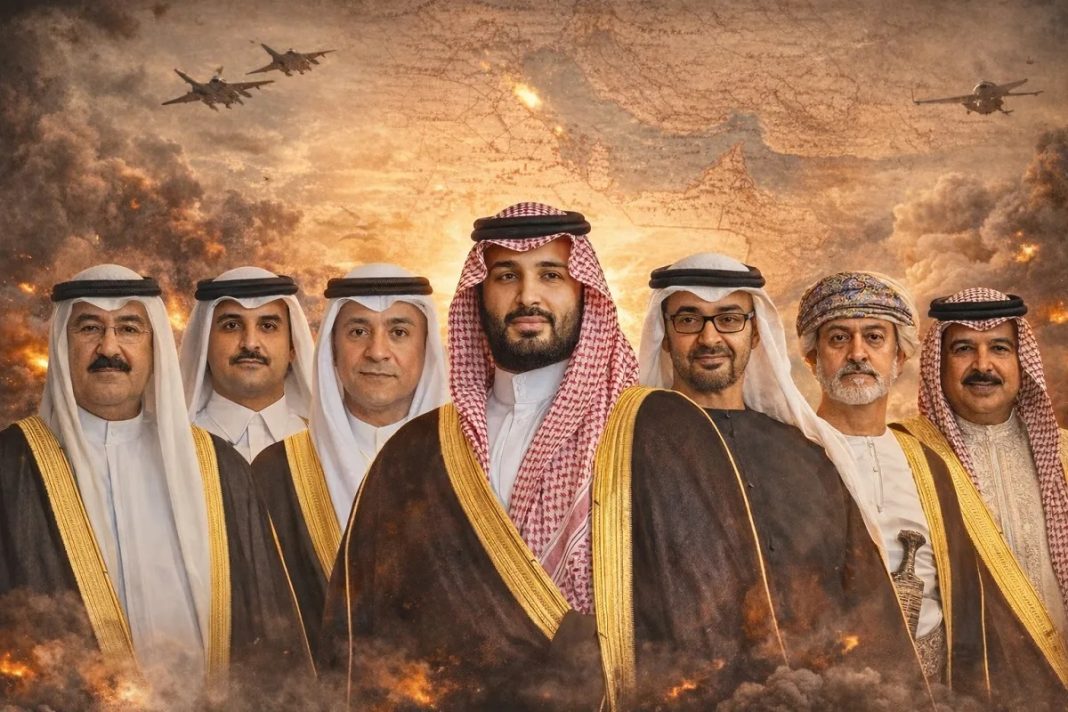
In the Gulf, the end of war does not mark a return to normalcy but the beginning of a deeper internal recalibration. As regional tensions persist, security is overtaking reform as the organizing principle of governance.
Gabriel G Tabarani
In the Gulf, the end of war does not signal the end of danger. It marks the beginning of a quieter, more consequential phase: the reordering of the domestic sphere under the logic of fear. Major conflicts do not merely redraw deterrence lines or shift alliances; they reshape internal priorities, forcing states to reassess the balance between political control, economic ambition, and social change.
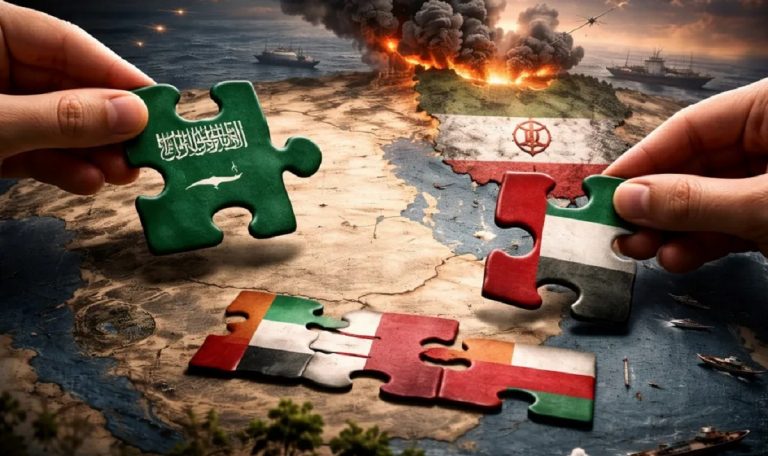
That recalibration is now underway across the Gulf. Confrontation with Iran—direct or by proxy—no longer appears as a passing security crisis but as a structural turning point. It is redefining how power is exercised, how stability is maintained, and how governments navigate the tension between openness and control, reform and resilience, external reliance and self-sufficiency.
For much of the past decade, several Gulf states had been moving, at varying speeds, toward a model of controlled modernization. Economic diversification, social liberalization, and global integration became the pillars of a new form of legitimacy: prosperity in exchange for political continuity. These shifts stopped well short of political democratization, but they offered a recalibrated social contract.
War has disrupted that balance. When oil infrastructure, shipping lanes, cities, digital networks—even the informational sphere—become potential targets, governments grow less willing to experiment. Security, not reform, becomes the primary lens through which policy is judged.
Reform, Recalibrated
This does not mean that modernization has been abandoned. Rather, it is being redesigned under tighter constraints. Reform has not disappeared, but it has lost its autonomy. It is now filtered through the imperatives of risk management and containment.
The result is a more cautious model—modernization under pressure. Economic diversification and institutional development continue, but within a more restrictive political and social environment, less tolerant of dissent and more sensitive to instability. The shift is subtle but significant: the pace slows, the margins narrow, and the state reasserts its role as the ultimate arbiter of acceptable change.
In traditionally cautious states, where governance has long relied on gradualism and internal consensus, the war has further reduced the appetite for experimentation. Expanding public space or testing new forms of participation has given way to a more immediate concern: preserving social cohesion and preventing spillover from regional escalation.
Even in systems where public debate was already limited, the tone has hardened. Administrative and economic reforms persist, but they are increasingly evaluated through the prism of stability rather than transformation. The consequence is a quieter, more controlled reform process—less visible, less ambitious, and more tightly managed.
Oman and Qatar illustrate this recalibration in distinct ways. Oman, historically anchored in neutrality and quiet diplomacy, appears inclined to preserve internal equilibrium by avoiding disruptive change amid rising tensions. Qatar, which built its profile on media openness and mediation, has also tightened control over its public sphere, emphasizing unity and stability. In both cases, reform has not reversed, but it has been reshaped by the demands of security.
Elsewhere, states that once defined themselves by openness—through globalized economies, international universities, and cross-border media—are now placing greater emphasis on controlling narratives. In an era of heightened vulnerability, perception itself becomes a security issue. Governments keen to project stability and attract investment grow less tolerant of internal discourse that could undermine that image.
This is not simply about military security. It is about managing perception, shaping official narratives, and safeguarding market confidence. The language of national unity and resilience has become more prominent, while space for ambiguity, dissent, or debate has receded.
Security First, Stability Deferred
In Saudi Arabia and the United Arab Emirates, the shift is more explicit. Both states had positioned themselves as engines of rapid transformation—hubs of investment, innovation, tourism, and global connectivity. War has not derailed that vision, but it has added a harder edge.
Modernization now proceeds under stricter oversight. Openness remains, but it is carefully bounded. Public discourse is increasingly framed in terms of security, loyalty, and cohesion. The state is signaling clearly: the limits of reform are not open-ended, and external threats justify greater control.
This has been reflected in tighter regulation of digital spaces, expanded use of legal frameworks to manage information, and a more assertive approach to shaping narratives around conflict and its implications. The message is consistent: transformation will continue, but only within parameters defined by the state.
Beneath this surface, however, the Gulf’s structural vulnerabilities remain. Despite their wealth, Gulf states are acutely sensitive to external shocks. Their economies, though diversifying, remain deeply tied to global energy markets and trade flows. Their demographics often feature a small citizen population alongside large expatriate communities. Their geography—from the Strait of Hormuz to critical infrastructure—renders them directly exposed to regional instability.
In such an environment, political openness can appear less as an asset than as a risk. The potential costs of dissent during periods of uncertainty may outweigh its perceived benefits. Yet tighter control does not eliminate underlying tensions; it merely suppresses them.
In Bahrain, long-standing political and sectarian divides intersect with regional polarization, making any escalation with Iran potentially destabilizing domestically. In Kuwait, where public debate and political life have historically been more open, external crises place additional strain on an already fragile internal balance marked by political deadlock and social pressures.
Here, the limits of a security-first model become apparent. While it can produce immediate calm, it does not resolve deeper structural questions. Over time, sustained emphasis on control—especially if accompanied by slower institutional reform—may generate latent pressures beneath the surface.
Societies are not measured solely by their ability to maintain order in times of crisis, but by their capacity to adapt, innovate, and absorb shocks. If security becomes a permanent governing logic, it may erode that flexibility—even if stability appears intact in the short term.
External Alignments, Rewritten
These internal shifts cannot be separated from a broader strategic dilemma: the Gulf’s evolving relationship with the United States. For decades, regional security rested on the assumption of a reliable American umbrella. But successive conflicts—from Iraq to attacks on energy infrastructure to the current escalation—have exposed its limits.
A more difficult question now looms: what happens when Washington’s priorities, particularly regarding Israel, diverge from those of its Gulf partners? What if the United States is both a stabilizer and, at times, a source of escalation?
This is no longer theoretical. It has become part of daily strategic calculations across Gulf capitals.
Yet alternatives are constrained. A full disengagement from the United States is neither practical nor desirable, given the depth of military, intelligence, and economic ties. Instead, the Gulf appears to be moving toward a more complex arrangement: maintaining the American partnership while diversifying its strategic options.
This includes expanding defense relationships, increasing autonomy, and engaging with a broader set of partners—China, Turkey, India, South Korea, Pakistan, and the European Union. The goal is not substitution but diversification: building a more resilient security portfolio that reduces dependence on any single actor.
China, in particular, occupies a distinctive role. It does not present itself as a security guarantor but as an economic and technological partner offering infrastructure, trade, and diplomatic engagement without demanding alignment. For many Gulf states, this model provides greater flexibility.
As the international system shifts toward multipolarity, such diversification is no longer optional. It is a strategic necessity.
A Region Rebalanced
The question, ultimately, is not whether the Gulf is becoming more secure or more restrictive, but how it is redefining the relationship between the two. The region is entering a phase in which its states seek to reconcile competing imperatives: economic openness without political vulnerability, strategic partnerships without dependency, reform without instability.
This is a delicate balance—perhaps an untenable one if conflict persists or resumes. What is clear is that the Gulf can no longer approach reform as it did before. Security has returned to the top of the hierarchy, bringing with it a deeper question: can long-term stability be built on control alone?
History suggests otherwise. Stability that relies solely on containment may endure, but it rarely evolves.
The real challenge for the Gulf is not simply managing external threats, but ensuring that fear does not become a permanent governing principle. The states that navigate periods of upheaval most successfully are not those that choose between security and reform, but those that prevent one from consuming the other.
Today, the Gulf stands precisely at that threshold.
The greater danger is not the war itself, but the possibility that its logic becomes permanent.
This article was originally published in Arabic on the Asswak Al-Arab website