Gabriel G. Tabarani*
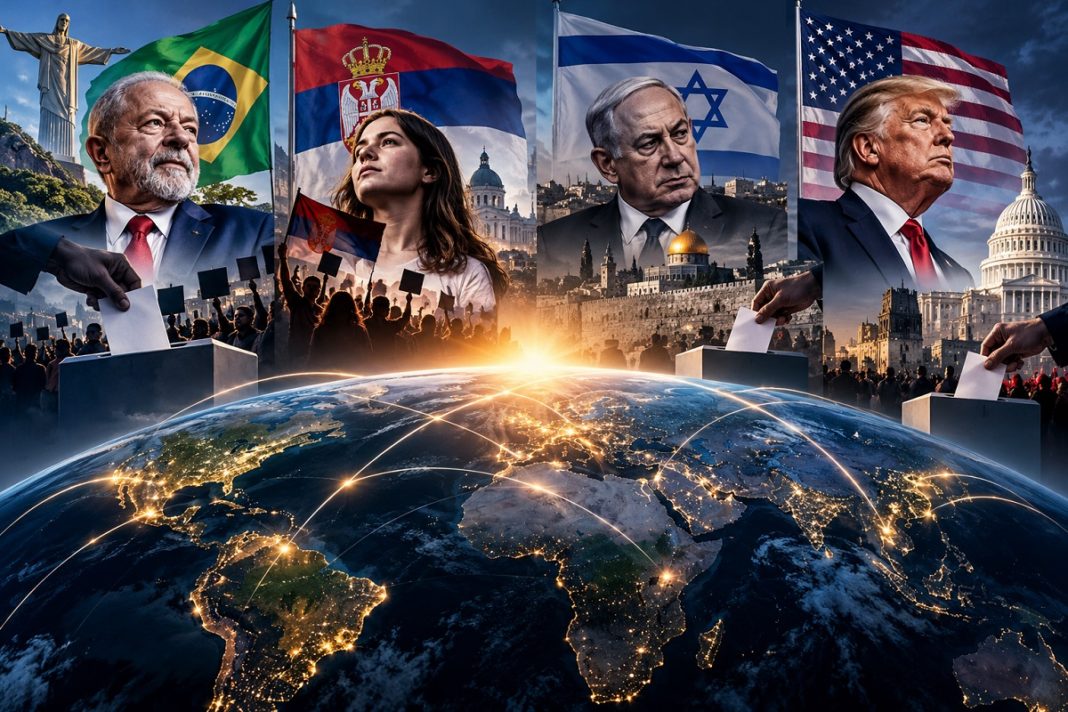
Elections are not always simply contests for political office. At certain moments, they become turning points that reveal the direction of history and threaten to redraw the balance of power. Four elections unfolding in quick succession — in Brazil, Serbia, Israel and the United States — offer a striking illustration of that possibility. These countries are separated by geography, political traditions and strategic interests. Yet their electoral battles raise a common question: Can the ballot box still change the course of nations, or have entrenched interests, institutional constraints and deepening divisions become more powerful than the voters themselves?
In Brazil, President Luiz Inácio Lula da Silva secured a significant victory over his right-wing challenger, Flávio Bolsonaro, winning approximately 51.8 percent of the vote and securing a fourth, non-consecutive term. His triumph ran counter to the rightward political momentum sweeping parts of Latin America, demonstrating that the region’s ideological future remains far from settled. But the significance of Lula’s victory extends well beyond the traditional struggle between left and right. Lula has long championed an independent Brazilian foreign policy, resisting the notion that Latin America should remain an exclusive sphere of American influence. At a time of intensifying competition among major powers, his continued leadership strengthens the position of countries seeking greater strategic autonomy and a more pluralistic international order.
Electoral victory, however, does not automatically translate into political authority. Lula faces a Congress in which conservative forces have gained strength, an economy burdened by public debt and an opposition unwilling to accept defeat easily. His predicament illustrates one of the central paradoxes of contemporary democracy: Voters can renew a government’s legitimacy without necessarily removing the obstacles that prevent it from governing effectively.
In Serbia, the message from the ballot box was different — and, in some respects, more dramatic. A student-led movement that emerged from protests against corruption and government mismanagement achieved a parliamentary victory, bringing an end to years of entrenched political dominance. What made the movement successful was not public anger alone, but its ability to transform that anger into an organized political force built on discipline, nonviolence and the participation of independent figures who commanded public trust. The Serbian experience matters because it has restored some credibility to politics as an instrument of change. Across much of the world, mass demonstrations have repeatedly exposed public dissatisfaction without producing lasting institutional reform. Serbia’s student movement demonstrated that street protests can become an effective electoral challenge when outrage is matched by organization and a credible alternative.
Yet defeating an established political order is not the same as building a viable replacement. The new political leadership must contend with administrative and security institutions shaped by years of previous rule, as well as difficult economic and regional challenges. The test will be whether a movement united by opposition can remain united by the responsibilities of government. Serbia’s importance also extends beyond the Balkans. For years, the country has provided Russia and China with a foothold in Europe while maintaining complicated relationships with the European Union and Washington. Political change in Belgrade could alter some of those regional calculations. But it will not easily erase Serbia’s nationalist legacy, its disputes over Kosovo or the networks of influence embedded within the state.
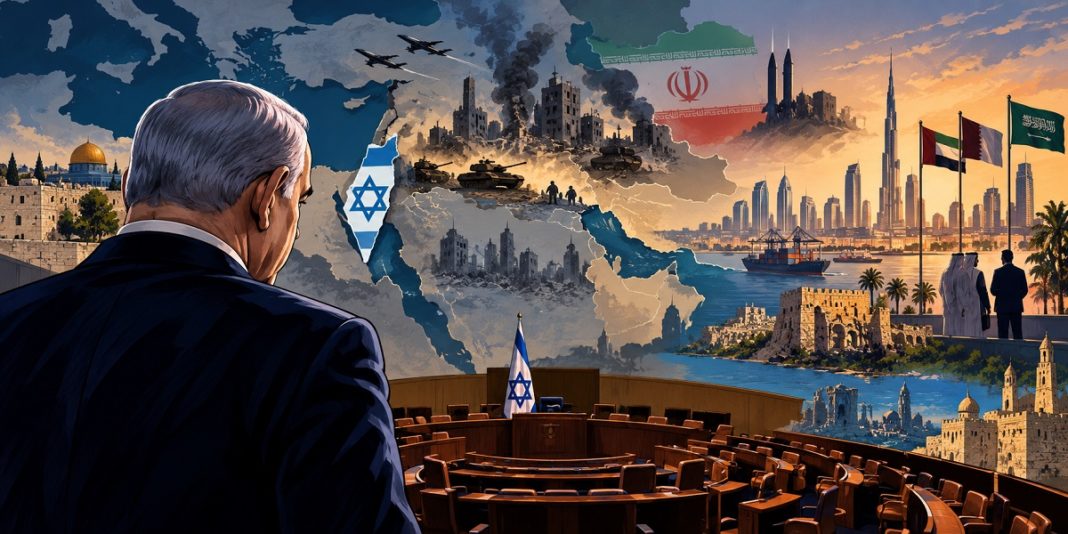
In Israel, meanwhile, the election exposed the limits of voting as a means of resolving political deadlock. Prime Minister Benjamin Netanyahu and his allies failed to secure the parliamentary majority needed to form a government. Yet the opposition also fell short of the numbers required to establish a coherent alternative. Netanyahu consequently remains a central figure in Israeli politics — not because he achieved a decisive victory, but because his opponents have been unable to convert their resistance to him into a governing coalition. The implications reach far beyond Israel’s domestic political arena. The country faces consequential decisions involving Gaza, the West Bank, Iran and its relations with Arab states. A center-right coalition could create room for adjustments in some policies. Continued parliamentary paralysis, by contrast, could produce another election and prolong political uncertainty.
But it would be a mistake to assume that a change of government would necessarily bring a fundamental change in Israel’s regional conduct. Security and military priorities often command support across party lines. A new coalition would not automatically produce a different approach to the Palestinians or reduce the possibility of regional confrontation. There is also the risk that calculations surrounding Netanyahu’s political survival could become entangled with military and security decisions whose consequences extend far beyond Israel’s borders — in a Middle East already struggling with the costs of prolonged conflict.
The United States, however, remains the most consequential electoral battleground of the four. The Nov. 3 midterm elections could substantially alter the balance of power in Washington. Polling and election forecasts have pointed to Democratic gains, raising the possibility that the party could regain control of both the House of Representatives and the Senate, although the Senate contest remains considerably more competitive and uncertain. Should Democrats capture both chambers, President Donald Trump would confront an opposition-controlled Congress capable of obstructing significant parts of his legislative agenda, intensifying oversight of his administration and launching investigations into his domestic and foreign policies. Control of the Senate would carry particular significance. Because the chamber confirms senior executive officials and federal judges, a Democratic majority could constrain Trump’s ability to reshape government institutions through appointments aligned with his priorities.
The consequences could extend well beyond Washington. A divided government could complicate American policy toward Iran, relations with European allies, trade and economic policy, and the future of U.S. support for Ukraine. Yet even a Democratic takeover of Congress would not strip Trump of the broad executive powers of the presidency, particularly in foreign affairs. Instead, it could usher in a period of sustained confrontation between the White House and Capitol Hill, marked by legislative gridlock, political bargaining and competing claims to democratic legitimacy. The situation is further complicated by divisions within the Democratic Party itself. Democrats do not speak with one voice on taxation, health care, Israel or foreign policy. Their ability to constrain the president would not necessarily translate into an ability to present a unified governing alternative.
Meanwhile, disputes over election integrity and the possibility of challenges to the results raise concerns that go beyond ordinary partisan competition. At stake is public confidence in the constitutional institutions that make democratic government possible. The United States could therefore face a paradox of its own: an opposition majority powerful enough to restrain the president, but not necessarily cohesive enough to offer a convincing alternative direction.
What connects these four elections is not a victory for the left or the right, nor the replacement of one political generation by another. It is the widening gap between electoral legitimacy and the actual capacity to exercise power. In Brazil, a divided political system limits the president’s freedom of action. In Serbia, an emerging leadership faces the challenge of reforming institutions shaped by its predecessors. In Israel, parliamentary fragmentation obstructs the formation of stable government. And in the United States, the constitutional system faces another test of its ability to contain political polarization.
These are not merely domestic struggles. They are unfolding at a time when established international assumptions are being challenged, major powers are competing for influence and societies are searching for leaders who can reconcile the demands of stability with the desire for change. Election results can no longer be understood as exclusively national events. Decisions made in Brasília, Belgrade, Jerusalem and Washington reverberate through military alliances, international trade, energy markets, regional conflicts and the broader architecture of global security.
The deeper question, then, is not simply who wins. It is whether those who win can translate electoral mandates into effective government — and whether the institutions they inherit will enable change or resist it. These four elections may not transform the world overnight. But they reveal something important about the political era taking shape: The struggle is no longer only about who reaches power, but who can actually exercise it, who defines its limits and whether the popular will can be translated into decisions that endure. The world does not change merely because its leaders change. It changes when the balance of power governing their decisions changes with them.
This article was originally published in Arabic on the Asswak Al-Arab website